
Food and drinkNutrients and supplements
Inulin (chicory root fibre): the added fibre in 'high-fibre' foods and the bloating it can bring
CAS 9005-80-5.Also known as chicory root fibre, chicory root fiber, chicory root extract, oligofructose, fructooligosaccharides, FOS, and agave inulin.
Editorial draft Last reviewed 21 November 2026 About 589 words
CC INDEX
How it works30/100 Mild
Inulin is increasingly added to processed foods. Human effects at typical amounts are mild digestive symptoms; a liver cancer signal exists only in specially susceptible mice.
An editorial summary of this article’s cited evidence. It isn’t medical advice or a personal risk estimate.
Age index
What is the age index?Which age groups are more affected by this chemical’s possible health issues, based on this article’s sources.
- Pregnancy Unborn babies Not well studied
- Infants 0 to 1 Not well studied
- Young children 1 to 5 Not well studied
- Children 6 to 12 Not well studied
- Teens 13 to 19 Not well studied
- Adults 20 to 64 Lower concern
- Older adults 65 and over Not well studied
- The human tolerance study used healthy adults; the liver finding is from mice only.

Illustration of fibre-enriched snacks and chicory root, a main source of inulin.
Credit: Chemical Century; AI-generated illustration
License: CC0 1.0
Illustration, not a photograph of a specific product. Resized and cropped for the web.
Inulin is a plant fibre, often from chicory root or agave, that food makers add to yogurts, cereal bars, protein snacks and low-sugar products to boost fibre and cut sugar or fat. Gut bacteria ferment it, which is why it is promoted as a prebiotic, and why it can cause wind and bloating. Small amounts are usually well tolerated. A mouse study in which inulin-rich diets triggered liver cancer in animals with abnormal gut bacteria has drawn attention, but nothing comparable has been shown in people.
Everyday exposure: where you meet it and how much
Inulin is a soluble, fermentable fibre added to many processed foods. FDA lists "inulin and inulin-type fructans" among the isolated fibres it intends to add to the US definition of dietary fibre, and meanwhile allows them to be counted as fibre on labels. [1,2] Labels may say "inulin", "chicory root fibre" or "oligofructose".
Known and suspected harms
Evidence labels are editorial summaries, not individual risk predictions: established means recognized under the stated conditions; probable means a likely contribution with uncertainty; possible means limited evidence; disputed means assessors disagree.
- Established — mild gut symptoms: in a randomised, double-blind, placebo-controlled crossover trial in 29 healthy adults, 5 g and 7.5 g of agave inulin a day for three weeks slightly increased bloating, wind and stomach rumbling. Overall intolerance scores stayed low (2.3 out of 12 at the higher dose) and there was no diarrhoea; stools became softer and more frequent at 7.5 g. [3]
- Possible — liver cancer in susceptible mice: in mice with abnormal gut bacteria, adding inulin to a defined diet caused a form of liver cancer that depended on gut bacteria fermenting the fibre; an inulin-enriched high-fat diet did the same in normal mice. The authors urged caution with fibre-enriched foods, but this has not been shown in people. [4]
Reducing avoidable exposure
If added-fibre foods leave you bloated, try smaller portions or whole-food fibre sources instead. [3]
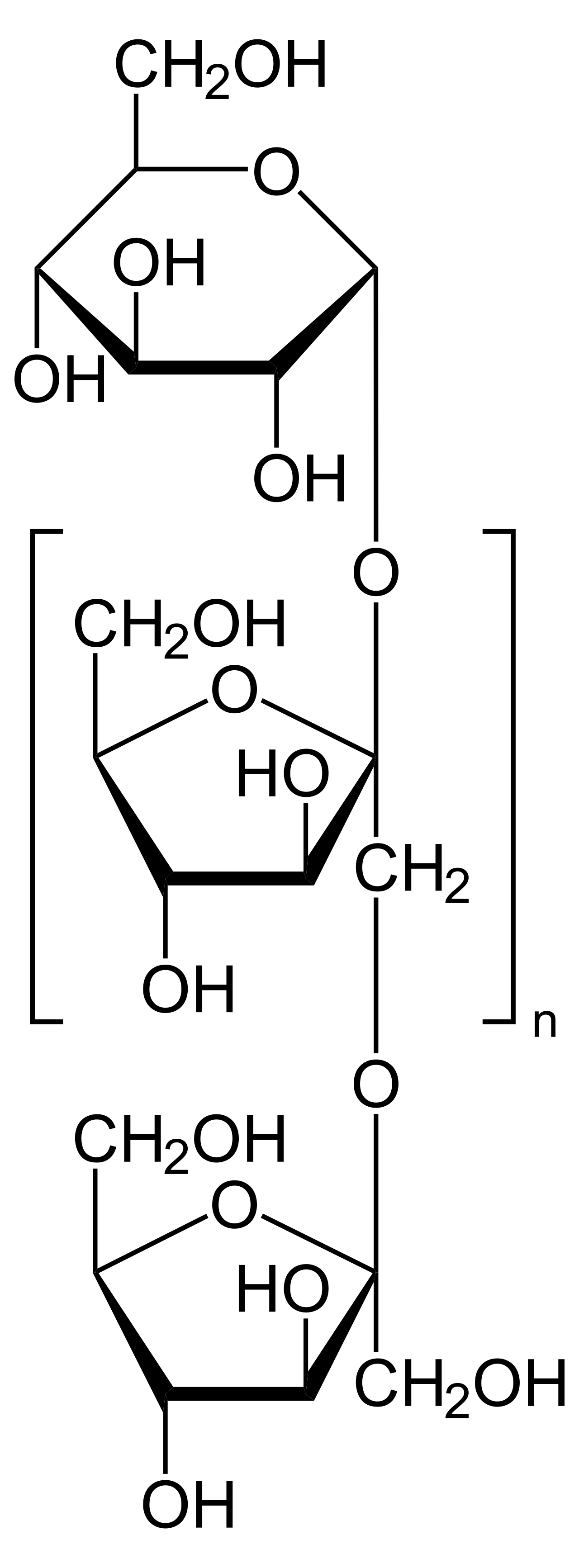
Structural formula of inulin.
Credit: NEUROtiker / Wikimedia Commons

License: Public domain
Wikimedia-provided scaled PNG/JPEG rendering; no content edits
What it is
Inulin is a chain of fructose units, usually ending in a glucose unit, found naturally in chicory root, agave and other plants. [3,4]
What it does and why it is used
It adds fibre to foods, which can then be counted on US fibre labels. Gut bacteria ferment it into short-chain fatty acids. [1,4]
Regulatory status and health context
International
The sources used here do not include an international evaluation.
United States
FDA intends to propose adding inulin-type fructans to the regulatory definition of dietary fibre and, until rulemaking, does not intend to object to their inclusion in the dietary fibre declaration. [1,2]
European Union
The sources used here do not cover EU rules for inulin.
Environmental notes
The sources used here do not provide enough environmental data for a rating.
Quick facts
- CAS: 9005-80-5.
- Sources: chicory root, agave and other plants. [3]
- US labels: may be counted as dietary fibre. [1,2]
- Common effect: bloating and wind, usually mild. [3]
Sources
Sources were accessed on 2026-11-21. Source publication dates differ from this draft's review date. Image licences are listed with each image.
- FDA: Questions and answers on dietary fiber.
- FDA: Guidance for industry, the declaration of certain isolated or synthetic non-digestible carbohydrates as dietary fiber on nutrition and supplement facts labels.
- Holscher HD et al. Gastrointestinal tolerance and utilization of agave inulin by healthy adults. Food Funct, 2014 (PubMed).
- Singh V et al. Dysregulated microbial fermentation of soluble fiber induces cholestatic liver cancer. Cell, 2018 (PubMed).