
Skin and personal careCleaning and laundry
Methylisothiazolinone (MI): why do some shampoos and cleaners cause rashes?
CAS 2682-20-4.Also known as MI, MIT, 2-methyl-4-isothiazolin-3-one, 2-methyl-2H-isothiazol-3-one, isothiazolinone preservative, and MCI/MI (with methylchloroisothiazolinone).
Editorial draft Last reviewed 21 November 2026 About 814 words
CC INDEX
How it works67/100 High
MI is a well-documented skin allergen. EU scientists found no safe concentration for leave-on cosmetics, so the EU and Canada banned it there and capped rinse-off use at 0.0015%. The harm is allergy rather than serious organ damage, but exposure from soaps, shampoos and cleaners is frequent.
An editorial summary of this article’s cited evidence. It isn’t medical advice or a personal risk estimate.
Age index
What is the age index?Which age groups are more affected by this chemical’s possible health issues, based on this article’s sources.
- Pregnancy Unborn babies Not well studied
- Infants 0 to 1 Not well studied
- Young children 1 to 5 Moderate
- Children 6 to 12 Moderate
- Teens 13 to 19 Moderate
- Adults 20 to 64 Higher concern
- Older adults 65 and over Moderate
- Young children (moderate): Wet wipes and leave-on products (EU found no safe level)
- Adults (higher concern): Repeated contact at home and work (cleaning, painting, hairdressing)
- Risk depends mostly on repeated skin contact; once allergic, a person reacts at any age.

Illustration of rinse-off and cleaning products. MI is a preservative found in some water-based products.
Credit: Chemical Century; AI-generated illustration
License: CC0 1.0
Illustration, not a photograph of a specific product. Resized and cropped for the web.
Methylisothiazolinone is a preservative that keeps water-based products such as shampoos, liquid soaps, wet wipes, laundry and cleaning products and paints from growing mould and bacteria. For most people it causes no trouble, but it became one of the most common causes of allergic skin rashes, with itchy, red, sometimes blistering patches on the hands, face or eyelids. Once someone is allergic, even small amounts can set off a flare, which can make everyday chores and grooming miserable. Europe and Canada now ban it in leave-on products such as lotions and wipes and allow only tiny amounts in rinse-off products.
Everyday exposure: where you meet it and how much
Methylisothiazolinone (MI) is a preservative in water-based products, including cosmetics and paint. [5,7] A 2026 label survey of supermarket products in Turkey found MI and methylchloroisothiazolinone (MCI) among the most common preservatives in both rinse-off cosmetics and household cleaning products, with laundry detergents carrying the highest preservative load. [8] Exposure is mainly through the skin, often several times a day, but MI is also volatile: a Danish study found MI in all 19 water-based paints tested, and MI kept evaporating from painted surfaces for more than 42 days. [7]
Known and suspected harms
Evidence labels are editorial summaries, not individual risk predictions: established means recognized under the stated conditions; probable means a likely contribution with uncertainty; possible means limited evidence; disputed means assessors disagree.
- Established — allergic contact dermatitis: the European Commission, relying on its Scientific Committee on Consumer Safety (SCCS), noted an "increased incidence of allergies induced by methylisothiazolinone." The SCCS concluded that 100 ppm MI in cosmetics is not safe and that no safe concentration had been shown for leave-on products, including wet wipes. [1] MI was named "Allergen of the Year" by the American Contact Dermatitis Society in 2013. [5]
- Probable — airborne reactions from fresh paint: because MI evaporates from paint for weeks, researchers concluded it can be an important cause of airborne contact dermatitis among painters and consumers. [7]
- Established — lower amounts in rinse-off products are considered safe for preventing new allergy: the SCCS found up to 0.0015% (15 ppm) in rinse-off products safe for consumers from the point of view of inducing allergy. People who are already allergic may still react. [2]
The sources used here describe skin allergy as the main harm; they do not report cancer or organ damage from cosmetic use.
Reducing avoidable exposure
If you have an unexplained rash on the hands, face or eyelids, ask about patch testing with a dermatologist. If you are allergic to MI, read ingredient lists for "methylisothiazolinone" and "methylchloroisothiazolinone," wear gloves for cleaning and painting, and keep rooms ventilated, or stay out of them, for several days after painting. FDA lists MI among preservatives that cause allergic reactions to cosmetics and notes that patch testing can identify the allergen. [3,6,7]
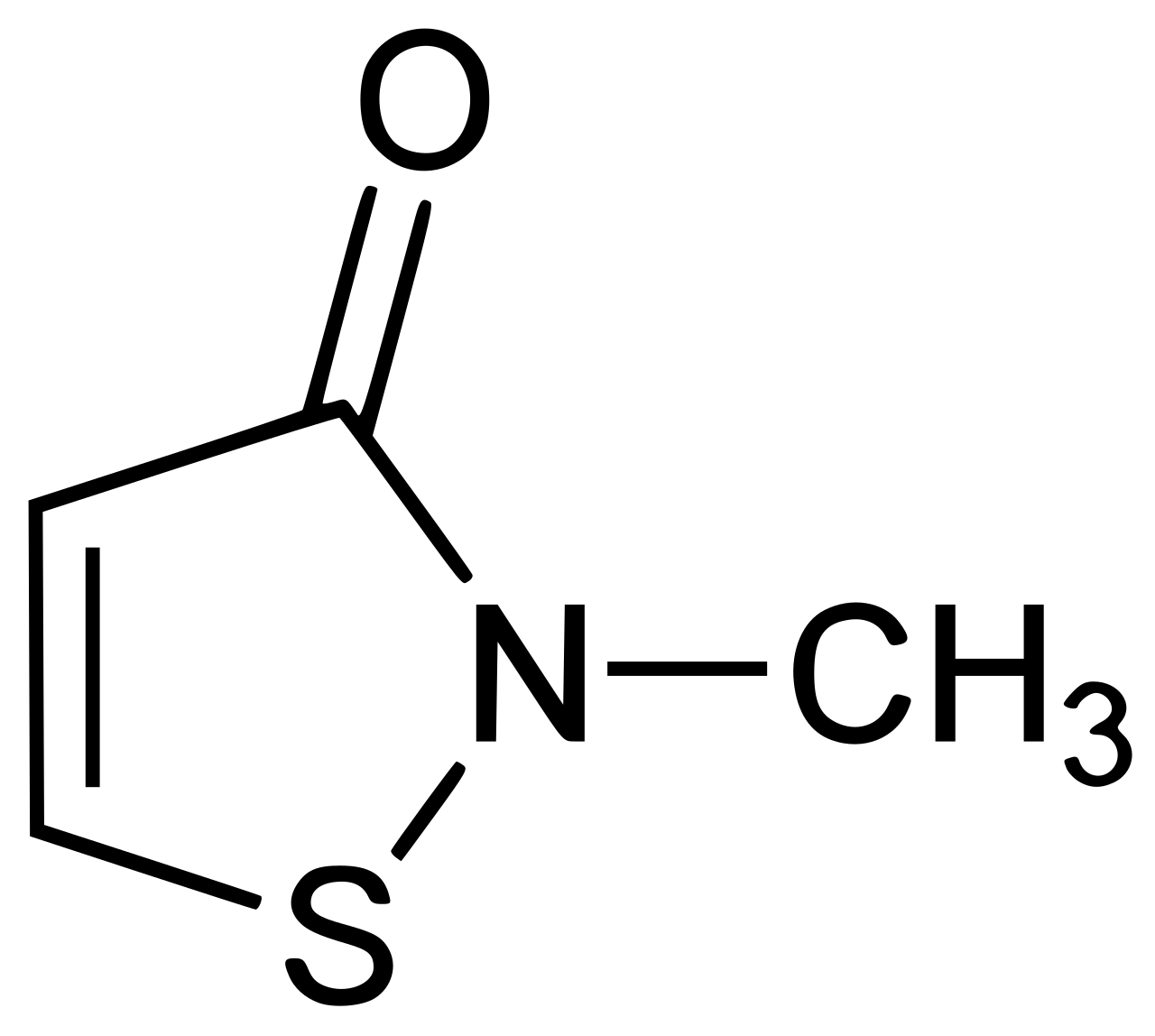
Structural formula of methylisothiazolinone.
Credit: Leyo / Wikimedia Commons

License: Public domain
Wikimedia-provided scaled PNG/JPEG rendering; no content edits
What it is
Methylisothiazolinone (CAS 2682-20-4) is a small ring-shaped molecule containing sulfur and nitrogen. It is often used alone or in a mixture with methylchloroisothiazolinone (MCI). [2,3]
What it does and why it is used
It stops bacteria and fungi from growing, preventing spoilage in water-based cosmetics, cleaners and paints. [5,7,8]
Regulatory status and health context
Canada
Health Canada's Cosmetic Ingredient Hotlist states that MI is not permitted in leave-on cosmetics and is limited to 0.0015% in rinse-off products. Canada added the leave-on ban and lowered the rinse-off limit in June 2018 because of the risk of sensitization. [3,4]
United States
FDA lists MI and MCI among the preservatives that cause allergic reactions to cosmetics. The sources used here do not show a US concentration limit for MI in cosmetics. [6]
European Union
The EU banned MI in leave-on cosmetic products under Regulation (EU) 2016/1198 and limited it to 0.0015% in rinse-off products under Regulation (EU) 2017/1224. [1,2]
Environmental notes
The sources used here do not provide enough environmental data for a rating.
Quick facts
- CAS: 2682-20-4. [2]
- Use: preservative in shampoos, soaps, wipes, cleaners and paints. [1,7,8]
- Main harm: allergic contact dermatitis (established). [1]
- EU and Canada: banned in leave-on products; 0.0015% maximum in rinse-off. [1,2,3]
- Label names: methylisothiazolinone; methylchloroisothiazolinone (in mixtures). [3]
Sources
Sources were accessed on 2026-11-21. Source publication dates differ from this draft's review date. Image licences are listed with each image.
- European Commission: Regulation (EU) 2016/1198 banning methylisothiazolinone in leave-on cosmetic products (EUR-Lex).
- European Commission: Regulation (EU) 2017/1224 limiting methylisothiazolinone in rinse-off cosmetic products (EUR-Lex).
- Health Canada: Cosmetic Ingredient Hotlist.
- Health Canada: Changes to the Cosmetic Ingredient Hotlist.
- Castanedo-Tardana MP, Zug KA. Methylisothiazolinone. Dermatitis, 2013 (PubMed).
- FDA: Allergens in cosmetics.
- Lundov MD et al. Emission of isothiazolinones from water-based paints. Environ Sci Technol, 2014 (PubMed).
- Mangır Ö et al. Fragrance and preservative contact allergens in cosmetic and household cleaning products in Turkey. Contact Dermatitis, 2026 (PubMed).