
Food and drinkSkin and personal care
BHT (butylated hydroxytoluene): the antioxidant preservative in foods and cosmetics
CAS 128-37-0.Also known as BHT, E321, 2,6-di-tert-butyl-4-methylphenol, and dibutylhydroxytoluene.
Editorial draft Last reviewed 21 November 2026 About 675 words
CC INDEX
How it works48/100 Moderate
BHT exposure is widespread, and EFSA found some high-consuming children exceed the ADI. Animal effects occur at high doses and cancer risk is considered thresholded. FDA limits antioxidants to 0.02% of fat.
An editorial summary of this article’s cited evidence. It isn’t medical advice or a personal risk estimate.
Age index
What is the age index?Which age groups are more affected by this chemical’s possible health issues, based on this article’s sources.
- Pregnancy Unborn babies Not well studied
- Infants 0 to 1 Not well studied
- Young children 1 to 5 Moderate
- Children 6 to 12 Moderate
- Teens 13 to 19 Lower concern
- Adults 20 to 64 Lower concern
- Older adults 65 and over Lower concern
- Young children (moderate): Highest urine levels at ages 3–5; some exceed safe intake
- Children (moderate): High-intake children exceeded EU safe intake in two countries

Illustration of packaged food and face cream. BHT protects fats in foods and cosmetics.
Credit: Chemical Century; AI-generated illustration
License: CC0 1.0
Illustration, not a photograph of a specific product. Resized and cropped for the web.
BHT is a synthetic antioxidant used to keep fats in foods from going rancid and to protect oils in cosmetics. Most adults take in far less than the safe daily limit set by European scientists, but some children with high intakes may go over it. Animal studies at high doses found effects on the liver, thyroid and reproduction, and BHT is under study as a possible hormone disruptor. A large German survey found BHT breakdown products in the urine of nearly all children tested, with the highest levels in preschoolers.
Everyday exposure: where you meet it and how much
BHT is used as a food additive and in cosmetics. [3] In the United States it is generally recognized as safe in food when total antioxidants do not exceed 0.02% of the fat or oil content. [1] In a representative German survey of 2,091 children and adolescents aged 3 to 17 (2014–2017), a BHT breakdown product was found in urine across the population, with the highest average levels in children aged 3 to 5; no specific sources could be identified. [3]
Known and suspected harms
Evidence labels are editorial summaries, not individual risk predictions: established means recognized under the stated conditions; probable means a likely contribution with uncertainty; possible means limited evidence; disputed means assessors disagree.
- Established — children's intake can exceed the safe limit: EFSA set an acceptable daily intake of 0.25 mg/kg body weight in 2012. It found adults unlikely to exceed it, but children at the 95th percentile of intake exceeded it in some countries (Finland and the Netherlands). [2]
- Possible — effects at high doses in animals: the earlier EU safe intake was based on thyroid, reproductive and blood effects in rats. EFSA's current limit is based on effects in two-generation rat studies and also covers liver tumours seen in male rats at much higher doses; EFSA considered any cancer effect to have a threshold and found no genotoxicity concern. [2]
- Possible — hormone disruption: BHT is among substances suspected of endocrine-disrupting effects, which motivated biomonitoring. [3]
Reducing avoidable exposure
Check ingredient lists of packaged foods and cosmetics for "BHT" or "E321", and offer young children fewer packaged snacks. These are precautionary steps. [1,3]
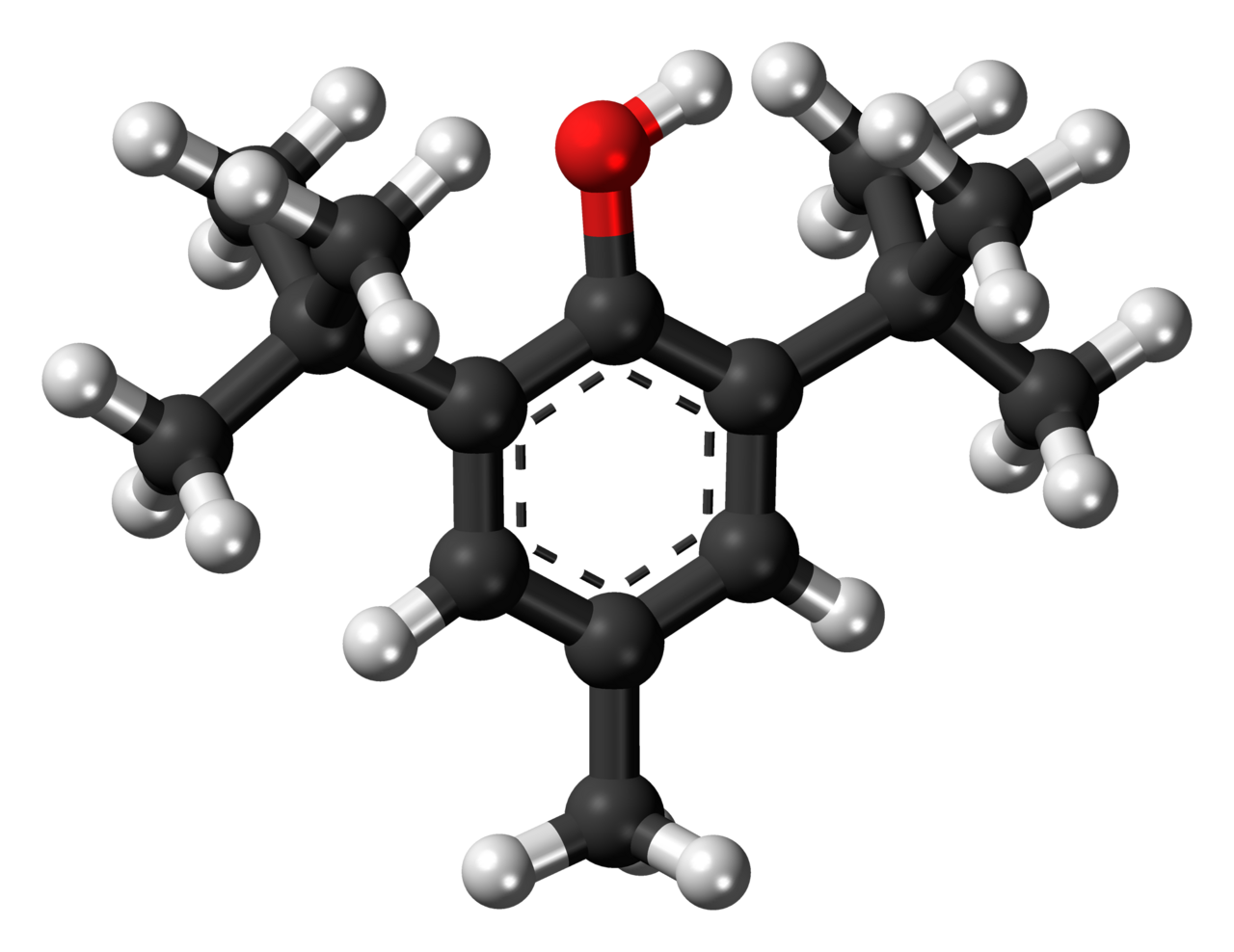
Ball-and-stick model of butylated hydroxytoluene (BHT).
Credit: Jynto / Wikimedia Commons

License: CC0
Wikimedia-provided scaled PNG/JPEG rendering; no content edits
What it is
BHT (CAS 128-37-0) is a phenol with two bulky tert-butyl groups and a methyl group. [2]
What it does and why it is used
It is an antioxidant that slows fats and oils from oxidising. [1,2]
Regulatory status and health context
Canada
The sources used here do not cover Canadian rules for BHT.
United States
BHT is GRAS in food when total antioxidants do not exceed 0.02% of fat or oil. [1]
European Union
BHT is authorised as E 321; EFSA raised the ADI to 0.25 mg/kg body weight in 2012. [2]
In cosmetics, after a 2019 call for data on possible endocrine-disrupting properties, EU scientists found BHT safe up to 0.001% in mouthwash, 0.1% in toothpaste and 0.8% in other products, and the EU restricted it to those levels. [4]
Environmental notes
The sources used here do not provide enough environmental data for a rating.
Quick facts
- CAS: 128-37-0.
- US limit: 0.02% of fat or oil (antioxidants combined). [1]
- EU ADI: 0.25 mg/kg body weight. [2]
- Children: highest urine levels at ages 3 to 5 in Germany. [3]
- Animal findings: high-dose liver, thyroid and reproductive effects (possible). [2]
- EU cosmetics limit: 0.8% in most products. [4]
Planning meals around fewer additives? See also The Low-Additive Family Meal Plan, a printable 7-day plan with recipes and a grocery list ($4 USD).
Sources
Sources were accessed on 2026-11-21. Source publication dates differ from this draft's review date. Image licences are listed with each image.
- eCFR: 21 CFR 182.3173, butylated hydroxytoluene.
- EFSA ANS Panel. Scientific opinion on the re-evaluation of butylated hydroxytoluene BHT (E 321) as a food additive. EFSA Journal, 2012 (PubMed).
- Murawski A et al. Metabolites of 4-MBC, BHT and TOTM in urine of children and adolescents in Germany: GerES V. Environ Res, 2021 (PubMed).
- European Commission: Regulation (EU) 2022/2195 amending the Cosmetics Regulation for butylated hydroxytoluene, homosalate and other substances (EUR-Lex).