
Food and drinkCleaning and laundry
Acetic acid (vinegar): safe cleaning, the bleach warning and the blood sugar claims
CAS 64-19-7.Also known as vinegar, white vinegar, cleaning vinegar, E260, E 260, ethanoic acid, and apple cider vinegar.
Editorial draft Last reviewed 21 November 2026 About 662 words
CC INDEX
How it works42/100 Moderate
Acetic acid is everywhere in food and home cleaning. Harms are mainly from misuse, especially mixing with bleach, and are preventable.
An editorial summary of this article’s cited evidence. It isn’t medical advice or a personal risk estimate.
Age index
What is the age index?Which age groups are more affected by this chemical’s possible health issues, based on this article’s sources.
- Pregnancy Unborn babies Not well studied
- Infants 0 to 1 Not well studied
- Young children 1 to 5 Moderate
- Children 6 to 12 Lower concern
- Teens 13 to 19 Moderate
- Adults 20 to 64 Lower concern
- Older adults 65 and over Not well studied
- Young children (moderate): Vinegar compresses on skin have caused burns
- Teens (moderate): Daily vinegar drinks have eroded teeth
- Most documented harms come from misuse: mixing with bleach, skin compresses, neat swallowing or daily vinegar drinks.

Illustration of vinegar for cleaning and pickling. Never mix vinegar with bleach.
Credit: Chemical Century; AI-generated illustration
License: CC0 1.0
Illustration, not a photograph of a specific product. Resized and cropped for the web.
Acetic acid is the sour part of vinegar, used in pickles, dressings and sauces and widely recommended as a simpler alternative to harsher cleaning products. For most uses it is low risk, but it has real hazards: mixing vinegar with bleach releases chlorine gas, and vinegar left on skin or swallowed neat can burn. Studies suggest vinegar with a meal can modestly lower the rise in blood sugar afterwards, which has made apple cider vinegar drinks popular, but regular sipping can erode tooth enamel. It is a useful swap, as long as it is used the right way.
Everyday exposure: where you meet it and how much
Acetic acid occurs naturally in plant and animal tissues and is made by fermenting carbohydrates or by chemical synthesis. [1] It is the main acid in vinegar and an authorised food additive in the EU, E 260. [2,7] Many people also use vinegar for cleaning.
Known and suspected harms
Evidence labels are editorial summaries, not individual risk predictions: established means recognized under the stated conditions; probable means a likely contribution with uncertainty; possible means limited evidence; disputed means assessors disagree.
- Established — chlorine gas when mixed with bleach: mixing vinegar with chlorine bleach releases chlorine gas, which irritates the airways, eyes, nose and throat; mixing bleach with any acid forms chlorine gas. [2,3]
- Established — burns and throat injury from misuse: poison specialists describe skin burns from vinegar compresses used for fever or injuries, and corneal injury if it gets in the eyes. [2] A woman who drank one tablespoon of white vinegar to dislodge a crab shell had second-degree caustic injury of the oesophagus. [4]
- Possible — tooth erosion from daily vinegar drinks: a 15-year-old developed erosive tooth wear attributed to a daily glass of apple cider vinegar taken for weight loss. This is a single case report. [5]
- Probable — lower blood sugar after meals: a meta-analysis of clinical trials found vinegar with a meal significantly reduced post-meal glucose and insulin responses. This is a modest effect, not a treatment for diabetes. [6]
Reducing avoidable exposure
Never mix vinegar with bleach or bleach-containing products. Do not put vinegar compresses on skin or swallow it neat, and keep vinegar supplements away from children. If you drink diluted vinegar, avoid sipping it throughout the day. Ask a clinician before using vinegar supplements. [2,3,5]
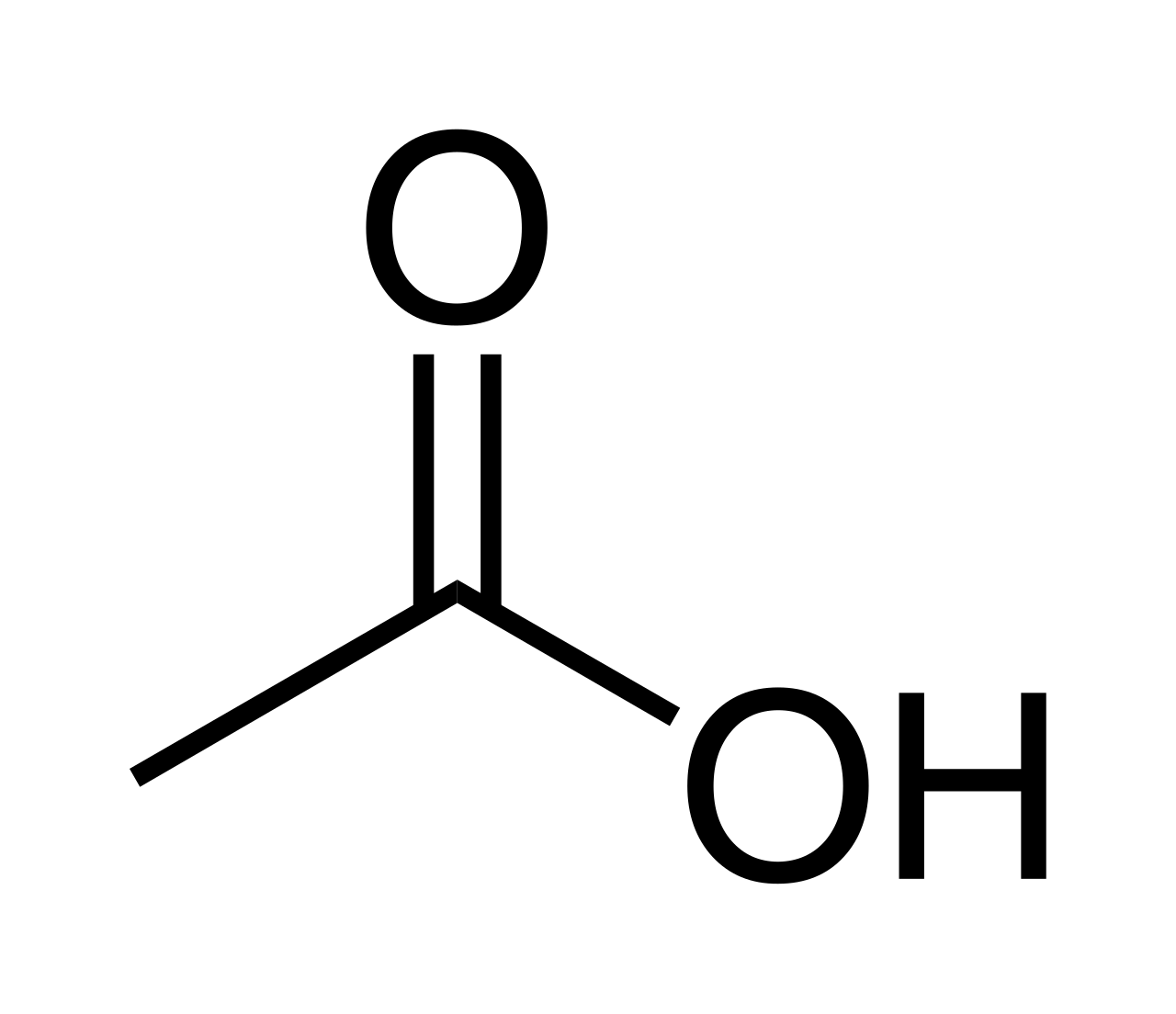
Structural formula of acetic acid.
Credit: Unknown / Wikimedia Commons

License: Public domain
Wikimedia-provided scaled PNG/JPEG rendering; no content edits
What it is
Acetic acid (ethanoic acid, CH3COOH) is a simple organic acid. Household vinegar is a dilute solution, with grape vinegar described at about 5%. [1,2]
What it does and why it is used
It adds sourness, preserves pickles and controls acidity in food, and is widely used as a household cleaner. [1,2]
Regulatory status and health context
International
The sources used here do not include an international evaluation.
United States
Acetic acid is affirmed as GRAS for food use under good manufacturing practice. [1]
European Union
Acetic acid is authorised as food additive E 260. [7]
Environmental notes
The sources used here do not provide enough environmental data for a rating.
Quick facts
- CAS: 64-19-7. [1]
- E number: E 260. [7]
- Never mix with: chlorine bleach. [2,3]
- Blood sugar: modest reduction after meals in trials. [6]
Sources
Sources were accessed on 2026-11-21. Source publication dates differ from this draft's review date. Image licences are listed with each image.
- eCFR: 21 CFR 184.1005, acetic acid.
- Poison Control (National Capital Poison Center): Vinegar.
- Poison Control (National Capital Poison Center): Chlorine gas.
- Chung CH. Corrosive oesophageal injury following vinegar ingestion. Hong Kong Med J, 2002 (PubMed).
- Gambon DL et al. Unhealthy weight loss. Erosion by apple cider vinegar. Ned Tijdschr Tandheelkd, 2012 (PubMed).
- Shishehbor F et al. Vinegar consumption can attenuate postprandial glucose and insulin responses; a systematic review and meta-analysis of clinical trials. Diabetes Res Clin Pract, 2017 (PubMed).
- European Union: Regulation (EC) No 1333/2008 on food additives, consolidated text with the Union list (EUR-Lex).