
Zinc supplements: a needed mineral that causes nausea in excess and can lower copper over time
Also known as zinc gluconate, zinc sulfate, and zinc acetate.
Editorial draft Last reviewed 14 November 2026 About 863 words
CC INDEX
How it works40/100 Mild
Too much zinc causes well-described stomach symptoms, and long-term excess can lower copper and immunity, with nerve problems reported after heavy denture-cream use. Zinc is in almost all multivitamins and many cold products, so supplement exposure is common. US upper limits are advice rather than enforced limits, so the score sits in the mild band.
An editorial summary of this article’s cited evidence. It isn’t medical advice or a personal risk estimate.
Age index
What is the age index?Which age groups are more affected by this chemical’s possible health issues, based on this article’s sources.
- Pregnancy Unborn babies Not well studied
- Infants 0 to 1 Not well studied
- Young children 1 to 5 Not well studied
- Children 6 to 12 Not well studied
- Teens 13 to 19 Not well studied
- Adults 20 to 64 Moderate
- Older adults 65 and over Not well studied
- Upper limits are set for every age, from 4 milligrams a day for young infants to 40 milligrams for adults, but the sources do not single out one group as more sensitive to excess.

Illustration of zinc-rich foods and a supplement jar. Oysters contain very high amounts of zinc.
Credit: Chemical Century; AI-generated illustration
License: CC0 1.0
Illustration, not a photograph of a specific product. Resized and cropped for the web.
Zinc helps the immune system, wound healing and the sense of taste, and most people get enough from foods such as meat, seafood, beans, nuts and dairy. Supplements and cold lozenges are popular, and some studies suggest lozenges taken at the start of a cold may help it pass sooner. Taking too much is the main concern: it can bring on nausea, headaches and vomiting, and too much for a long time may weaken immunity and drain the body's copper. Overusing zinc-containing denture creams has also been linked to nerve problems, so it helps to read labels and count every source.
Everyday exposure: where you meet it and how much
Zinc is in many foods: oysters have very high amounts, and meat, fish, poultry, crab, lobster and fortified breakfast cereals are good sources, with beans, nuts, whole grains, eggs and dairy providing some. [1] Almost all multivitamin and mineral supplements contain zinc, and it is sold alone or with other ingredients, in forms such as zinc sulfate, zinc acetate and zinc gluconate. [1] It is also found in some denture adhesive creams and in over-the-counter cold products. [1]
Most people in the US get enough from food; groups that may fall short include vegetarians and vegans, people who have had gastrointestinal surgery or have digestive disorders, people who are pregnant or breastfeeding, older breastfed infants and people with alcohol use disorder. [1]
Known and suspected harms
Evidence labels are editorial summaries, not individual risk predictions: established means recognized under the stated conditions; probable means a likely contribution with uncertainty; possible means limited evidence; disputed means assessors disagree. These labels do not describe how common an effect is.
- Established — short-term excess: signs of too much zinc include nausea, dizziness, headaches, upset stomach, vomiting and loss of appetite. [1]
- Established — long-term excess: taking too much for a long time can lower immunity, reduce HDL (good) cholesterol and lower copper levels, and very high doses can reduce the body's absorption of magnesium. [1]
- Established — denture creams: using large amounts of zinc-containing denture creams, well beyond label directions, can lead to copper deficiency and neurological problems such as loss of coordination, numbness and weakness in the arms and legs. [1]
- Established — medicine interactions: zinc can reduce absorption of quinolone and tetracycline antibiotics and of penicillamine, and thiazide diuretics increase the amount of zinc lost in urine. [1]
- Established — industrial zinc poisoning: zinc compounds used to make paint, rubber, dyes and wood preservatives, and fumes from heated or burned galvanized metal, can cause poisoning; zinc oxide is relatively unharmful. [2]
Reducing avoidable exposure and harm
Daily upper limits include zinc from all sources: 4 milligrams for infants up to 6 months, 5 for 7 to 12 months, 7 for ages 1 to 3, 12 for ages 4 to 8, 23 for ages 9 to 13, 34 for teens and 40 for adults. [1] These limits do not apply to people taking zinc for medical reasons under a doctor's care. [1] Add up multivitamins, single supplements and cold lozenges, use denture cream only as labelled, and separate zinc from antibiotics: take the antibiotic at least 2 hours before or 4 to 6 hours after zinc. [1] Some studies suggest zinc lozenges or syrup started at the beginning of a cold speed recovery, though they do not seem to lessen symptoms. [1]
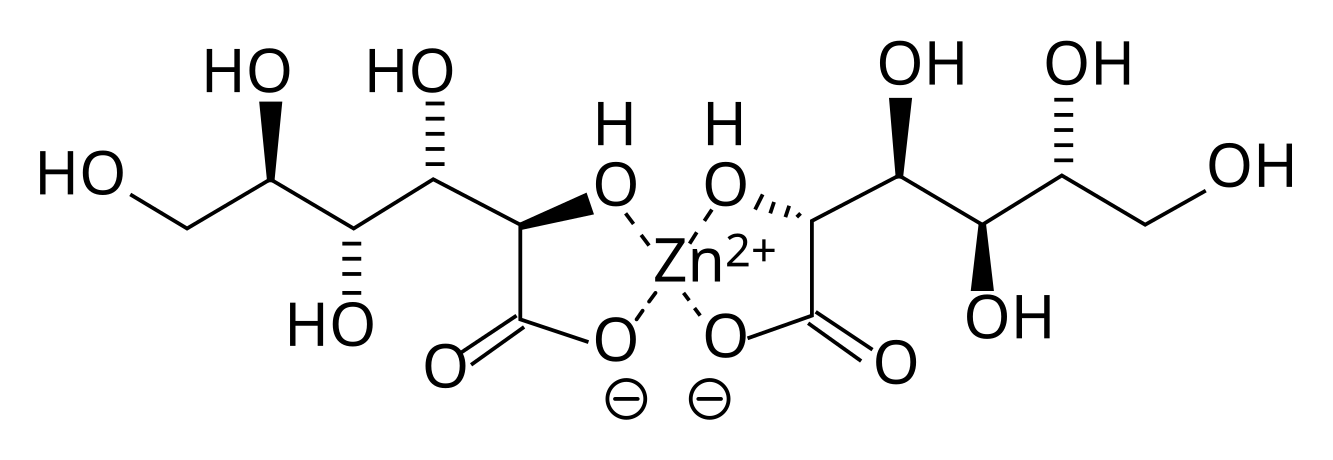
Structural formula of zinc gluconate, one of the forms of zinc used in supplements.
Credit: Slashme / Wikimedia Commons

License: Public domain
Rendered from SVG to PNG, whitespace trimmed and placed on white
What it is
Zinc is a metal and an essential mineral, found in cells throughout the body. [1,2] Supplements use zinc compounds such as zinc gluconate, zinc sulfate and zinc acetate, so no single CAS number applies. [1]
What it does and why it is used
The body needs zinc to fight off bacteria and viruses, make DNA and proteins, grow and develop during pregnancy, infancy, childhood and adolescence, heal wounds and taste properly. [1]
Regulatory status and health context
Canada
The sources used for this review do not cover zinc supplements' status in Canada, so we do not summarize it here.
United States
The upper limits described above are US dietary reference values published by the NIH Office of Dietary Supplements as guidance; the sources used for this review do not describe enforceable US limits on zinc supplements. [1]
European Union
The sources used for this review do not cover zinc supplements' status in the European Union, so we do not summarize it here.
Environmental notes
The sources used for this review do not assess environmental effects of zinc supplements, so we do not summarize them here.
Quick facts
- CAS: varies by compound (zinc gluconate, sulfate, acetate). [1]
- Where: multivitamins, zinc supplements, cold lozenges, some denture creams; oysters and meat in food. [1]
- Main danger: nausea and vomiting in excess; low copper and nerve problems with long-term overuse. [1]
- Most at risk: people taking several zinc products or overusing zinc denture creams. [1]
Sources
All URLs were fetched on 2026-11-14. Source publication dates differ from this draft's review date.