
Food and drinkSkin and personal care
Xylitol: the sugar-free sweetener that is gentle for people but dangerous for dogs
CAS 87-99-0.Also known as birch sugar, wood sugar, and E967.
Editorial draft Last reviewed 15 November 2026 About 663 words
CC INDEX
How it works34/100 Mild
The sources reviewed do not describe serious harm to people at normal intakes, and FDA says xylitol does not trigger insulin release in humans. It is common in sugar-free gum, mints and oral-care products, so exposure is frequent. It is a permitted sweetener in Canada and the US, so the score sits in the mild band.
An editorial summary of this article’s cited evidence. It isn’t medical advice or a personal risk estimate.
Age index
What is the age index?Which age groups are more affected by this chemical’s possible health issues, based on this article’s sources.
- Pregnancy Unborn babies Not well studied
- Infants 0 to 1 Not well studied
- Young children 1 to 5 Lower concern
- Children 6 to 12 Lower concern
- Teens 13 to 19 Lower concern
- Adults 20 to 64 Lower concern
- Older adults 65 and over Lower concern
- The sources reviewed describe xylitol as a permitted food sweetener for people and focus their warnings on dogs and ferrets; they do not give pregnancy- or infant-specific data.

Illustration of a dog investigating a handbag. Xylitol in sugar-free gum and toothpaste is safe for people but dangerous for dogs.
Credit: Chemical Century; AI-generated illustration
License: CC0 1.0
Illustration, not a photograph of a specific product. Resized and cropped for the web.
Xylitol is the sweetener behind a lot of sugar-free gum, mints, toothpaste and chewable vitamins. For people it works differently from sugar in a helpful way, which is part of why it is popular in products for people with diabetes. For dogs, though, even a small amount can trigger a sudden, dangerous drop in blood sugar. If there is a dog in the house, a quick label check and a high shelf may be the most useful habits to adopt.
Everyday exposure: where you meet it and how much
Xylitol is a sugar alcohol, also called birch sugar or wood sugar, that is found in sugar-free chewing gum, candy such as mints and chocolate bars, breath mints, baked goods, cough syrup, chewable vitamins, mouthwash, toothpaste, some peanut and nut butters, over-the-counter medicines, dietary supplements and sugar-free desserts. [1] It is slightly lower in calories than sugar and is often used in products for people with diabetes. [1]
Known and suspected harms
Evidence labels are editorial summaries, not individual risk predictions: established means recognized under the stated conditions; probable means a likely contribution with uncertainty; possible means limited evidence; disputed means assessors disagree. These labels do not describe how common an effect is.
- Established — poisoning in dogs: in dogs, xylitol is quickly absorbed and can trigger a potent insulin release, causing a rapid, profound fall in blood sugar within 10 to 60 minutes that can quickly be life-threatening if untreated. [1] Signs include vomiting, weakness, staggering, collapse and seizures, and some effects may be delayed for 12 to 24 hours. [1]
- Established — risk to ferrets: FDA notes that ferrets have developed low blood sugar and seizures after eating xylitol products; cats appear less affected. [1]
- Established — different response in people: in people, xylitol does not stimulate the release of insulin from the pancreas, which is why it does not cause the same reaction. [1]
Reducing avoidable exposure and harm
For people, the sources reviewed do not recommend avoiding xylitol. If you have a dog, check labels for xylitol, especially on sugar-free or low-sugar products, keep gum, mints, toothpaste and nut butters out of reach, and use only pet toothpaste for pets. [1] If a dog may have eaten xylitol, call a veterinarian, emergency clinic or animal poison control centre right away. [1]
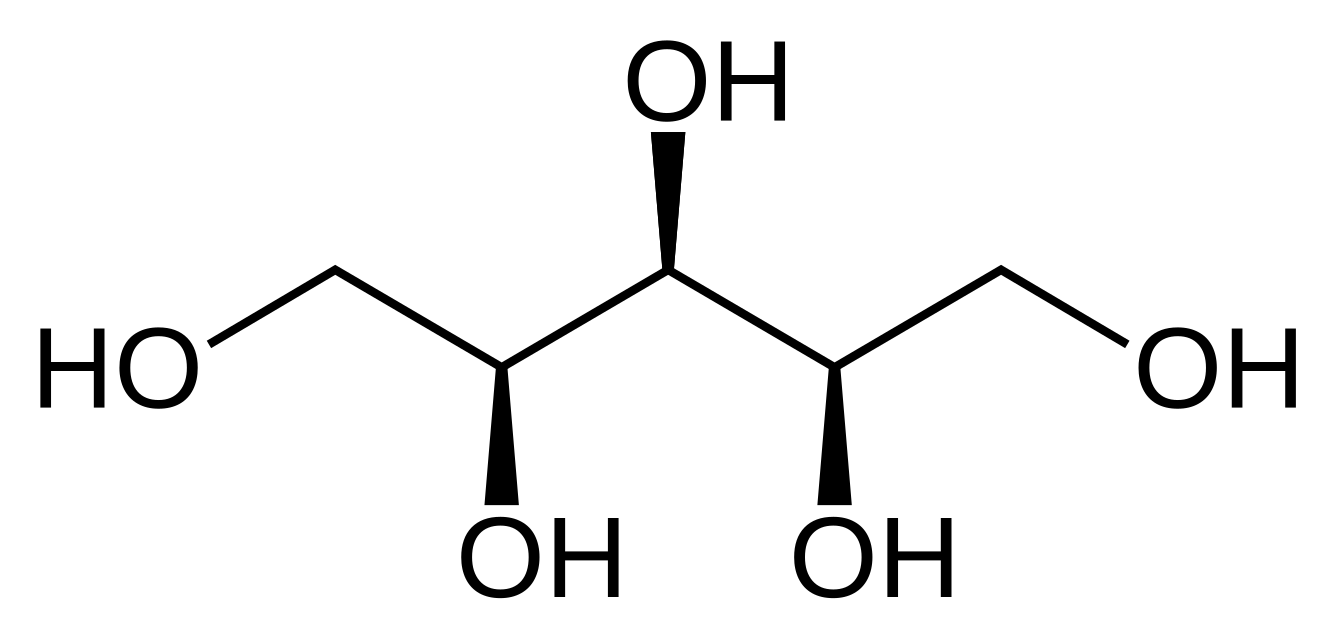
Structural formula of xylitol.
Credit: Kemikungen / Wikimedia Commons

License: Public domain
Rendered from SVG to PNG, whitespace trimmed and placed on white
What it is
Xylitol (CAS 87-99-0) is a five-carbon sugar alcohol used as a sweetener. [1,5]
What it does and why it is used
It sweetens sugar-free foods, gum, oral-care products and medicines with slightly fewer calories than sugar. [1] Some pediatric dentists recommend xylitol gum for children. [1]
Regulatory status and health context
Canada
Health Canada's List of Permitted Sweeteners allows xylitol as a sweetener in unstandardized foods at levels consistent with good manufacturing practice. [3]
United States
FDA allows xylitol in foods for special dietary uses in an amount no greater than needed for its intended effect. [2]
European Union
EFSA lists xylitol (E 967) among authorized sweeteners whose re-evaluation is ongoing. [4]
Environmental notes
The sources used for this review do not assess xylitol's environmental effects, so we do not summarize them here.
Quick facts
- CAS: 87-99-0. [5]
- Where: sugar-free gum and mints, toothpaste, chewable vitamins, some nut butters. [1]
- Main danger: life-threatening low blood sugar in dogs. [1]
- Most at risk: dogs and ferrets. [1]
Sources
All URLs were fetched on 2026-11-15; Health Canada pages were read with a separate web-reading tool because they did not respond to this review's direct requests, and EFSA pages were read with a browser. The EU law website was not fully available that day, so EU legislation itself could not be checked. Source publication dates differ from this draft's review date.