
Vitamin B6: a needed vitamin whose high-dose supplements can damage nerves
CAS 65-23-6.Also known as pyridoxine and pyridoxine hydrochloride.
Editorial draft Last reviewed 14 November 2026 About 818 words
CC INDEX
How it works52/100 Moderate
High doses of vitamin B6 are known to cause nerve damage, and Health Canada found a possible link at much lower supplement doses, although the case evidence was limited. Many health products contain B6, so exposure is common. Canada now expects warning labels on higher-dose natural health products, so the score sits in the moderate band.
An editorial summary of this article’s cited evidence. It isn’t medical advice or a personal risk estimate.
Age index
What is the age index?Which age groups are more affected by this chemical’s possible health issues, based on this article’s sources.
- Pregnancy Unborn babies Not well studied
- Infants 0 to 1 Not well studied
- Young children 1 to 5 Not well studied
- Children 6 to 12 Not well studied
- Teens 13 to 19 Not well studied
- Adults 20 to 64 Moderate
- Older adults 65 and over Not well studied
- The sources describe nerve damage in people taking B6 health products but do not compare risk by age.

Illustration of foods containing vitamin B6 and a supplement bottle. Chickpeas, bananas and fish are food sources of B6.
Credit: Chemical Century; AI-generated illustration
License: CC0 1.0
Illustration, not a photograph of a specific product. Resized and cropped for the web.
Vitamin B6 comes from everyday foods like chickpeas, bananas, fish, poultry and fortified cereals, and few people run short of it. It is also tucked into many multivitamins, B-complex pills and other health products, sometimes at doses well above the small amount the body needs. Large doses are known to damage nerves, showing up as numbness, tingling or pain in the hands and feet, and Canada's health regulator has found a possible link at much lower supplement doses too. Checking labels for B6 across every product you take, and stopping if unusual tingling starts, are simple safeguards.
Everyday exposure: where you meet it and how much
Vitamin B6 is found in tuna and salmon, bananas, legumes, beef, pork, poultry, nuts, whole grains, chickpeas and fortified breads and cereals. [1] Recommended intakes are small, about 1.3 milligrams a day for most adults up to age 50. [1] Lack of vitamin B6 is uncommon, though it can occur in people with kidney failure, liver disease or excessive alcohol use. [1]
In Canada, more than 4,000 natural health products contain vitamin B6, and it is also found in prescription drugs and in some supplemented foods such as caffeinated energy drinks. [2]
Known and suspected harms
Evidence labels are editorial summaries, not individual risk predictions: established means recognized under the stated conditions; probable means a likely contribution with uncertainty; possible means limited evidence; disputed means assessors disagree. These labels do not describe how common an effect is.
- Established — nerve damage at high doses: large doses of vitamin B6 can cause difficulty coordinating movement, numbness and sensory changes. [1] Health Canada notes that health products providing 250 milligrams a day and above may cause peripheral neuropathy, damage to nerves outside the brain and spinal cord. [2]
- Possible — nerve damage at lower supplement doses: Health Canada's review found a possible link between B6-containing natural health products and peripheral neuropathy at daily doses of 10 milligrams or higher; it did not find sufficient evidence of a link for prescription drugs. [2] The review identified 17 cases, but only 2 could be assessed further, and both had other factors that may have contributed. [2]
- Established — harm from too little: deficiency can cause confusion, depression, irritability, mouth and tongue sores, peripheral neuropathy and a form of anemia. [1]
Reducing avoidable exposure and harm
Add up the B6 in all the multivitamins, B-complex and other health products you take, and remember that some energy drinks and supplemented foods may also contain higher amounts. [2] Health Canada advises stopping B6-containing products and talking to a health care professional if numbness, tingling or pain in the hands or feet appears. [2] Fortified foods such as breakfast cereals have not been identified as a safety concern. [2]
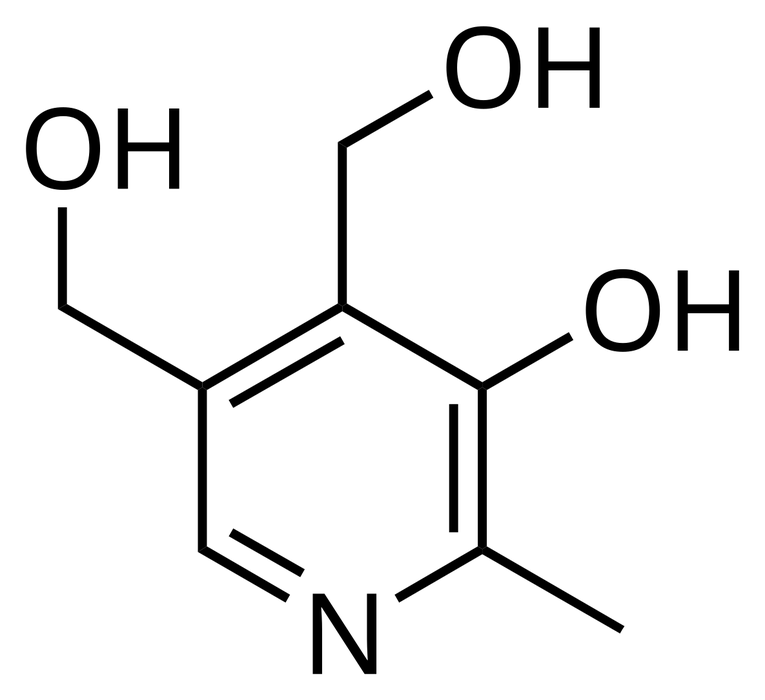
Skeletal structure of pyridoxine, a form of vitamin B6.
Credit: Calvero / Wikimedia Commons

License: Public domain
Rendered from SVG to PNG, whitespace trimmed and placed on white
What it is
Vitamin B6 is a water-soluble vitamin; leftover amounts leave the body in urine, so it has to be taken in regularly. [1] Pyridoxine (CAS 65-23-6) is one of its forms and is common in health products. [2,3]
What it does and why it is used
The body uses vitamin B6 to make antibodies and hemoglobin, maintain normal nerve function, break down proteins and keep blood sugar in normal ranges. [1] In Canada, natural health products use it to help energy metabolism and tissue formation, form red blood cells and prevent deficiency. [2]
Regulatory status and health context
Canada
After its safety review, Health Canada said it will update its monographs and expects licence holders to add warnings to labels of natural health products with 10 milligrams or more of vitamin B6 a day, describing numbness, tingling and pain in the extremities and advising consumers to stop use and consult a health care professional if symptoms occur. [2] B6 in supplemented foods is being reviewed separately. [2]
United States
The sources used for this review do not cover US rules for vitamin B6 supplements, so we do not summarize them here.
European Union
Health Canada reports that the European Food Safety Authority recommended lowering the tolerable upper intake level of vitamin B6 to 12 milligrams a day for foods. [2] The EU documents themselves were not reviewed for this article.
Environmental notes
The sources used for this review do not assess environmental effects of vitamin B6, so we do not summarize them here.
Quick facts
- CAS: 65-23-6 (pyridoxine). [3]
- Where: fish, poultry, chickpeas, bananas, fortified cereals; multivitamins and B-complex products. [1,2]
- Main danger: peripheral neuropathy (numbness, tingling, pain) from high-dose products. [1,2]
- Most at risk: people taking one or more B6-containing products every day. [2]
Sources
All URLs were fetched on 2026-11-14. Source publication dates differ from this draft's review date.