
Cleaning and laundryWater, air and residues
Trichloroethylene: the degreasing solvent now banned for most uses in the US
CAS 79-01-6.Also known as TCE, trichloroethene, and trichlor.
Editorial draft Last reviewed 15 November 2026 About 707 words
CC INDEX
How it works66/100 High
Prolonged exposure causes kidney cancer, and some studies link it to birth defects. Exposure is mainly through contaminated water and air near where it was used. EPA has banned most uses, so the score sits in the high band.
An editorial summary of this article’s cited evidence. It isn’t medical advice or a personal risk estimate.
Age index
What is the age index?Which age groups are more affected by this chemical’s possible health issues, based on this article’s sources.
- Pregnancy Unborn babies Higher concern
- Infants 0 to 1 Not well studied
- Young children 1 to 5 Moderate
- Children 6 to 12 Moderate
- Teens 13 to 19 Moderate
- Adults 20 to 64 Moderate
- Older adults 65 and over Moderate
- Pregnancy (higher concern): Some studies link it to heart defects in developing babies
- Some human studies link exposure in pregnancy to miscarriage, heart and nervous system defects and low birth weight, though those people were exposed to other chemicals too; Canada's water guideline is based on heart malformations. NCI advises keeping children from playing where it is found in soil.

Illustration of a metal workshop near a home well. Trichloroethylene was widely used to degrease metal and can contaminate groundwater.
Credit: Chemical Century; AI-generated illustration
License: CC0 1.0
Illustration, not a photograph of a specific product. Resized and cropped for the web.
Trichloroethylene is a strong solvent that factories have long used to strip grease from metal parts, and it has also shown up in some spot removers, spray adhesives and aerosol cleaners. It lingers in the environment and can seep into groundwater, which is how many communities near industrial or military sites have been exposed. Long-term exposure causes kidney cancer and may affect a developing baby. The US has now banned most of its uses, and avoiding contaminated water is the main thing households can do.
Everyday exposure: where you meet it and how much
Trichloroethylene is used mainly to make refrigerants and as a metal degreaser, and has been used in household products such as cleaning wipes, aerosol cleaners, tool cleaners, paint removers, spray adhesives and carpet spot removers. [1] Dry cleaners have used it as a spot remover. [1]
It breaks down slowly, passes readily through soil and can build up in groundwater. [1] People can be exposed by breathing it, drinking contaminated water or eating food washed or processed with contaminated water; contaminated soil and groundwater are found near many current and former military bases. [1]
Known and suspected harms
Evidence labels are editorial summaries, not individual risk predictions: established means recognized under the stated conditions; probable means a likely contribution with uncertainty; possible means limited evidence; disputed means assessors disagree. These labels do not describe how common an effect is.
- Established — cancer: prolonged or repeated exposure causes kidney cancer. [1]
- Possible — other cancers: some evidence suggests links with non-Hodgkin lymphoma and possibly liver cancer. [1]
- Established — nervous system: moderate overexposure can cause headaches, dizziness and sleepiness, and large amounts can cause coma and death. [2]
- Possible — pregnancy: some human studies indicate miscarriage, congenital heart defects, nervous system defects and low birth weight, though those people were also exposed to other chemicals. [2]
Reducing avoidable exposure and harm
Avoid drinking water known to be contaminated with trichloroethylene, keep children from playing where it has been found in soil, and follow product label instructions. [1] People who work with or near it should wear protective equipment. [1]
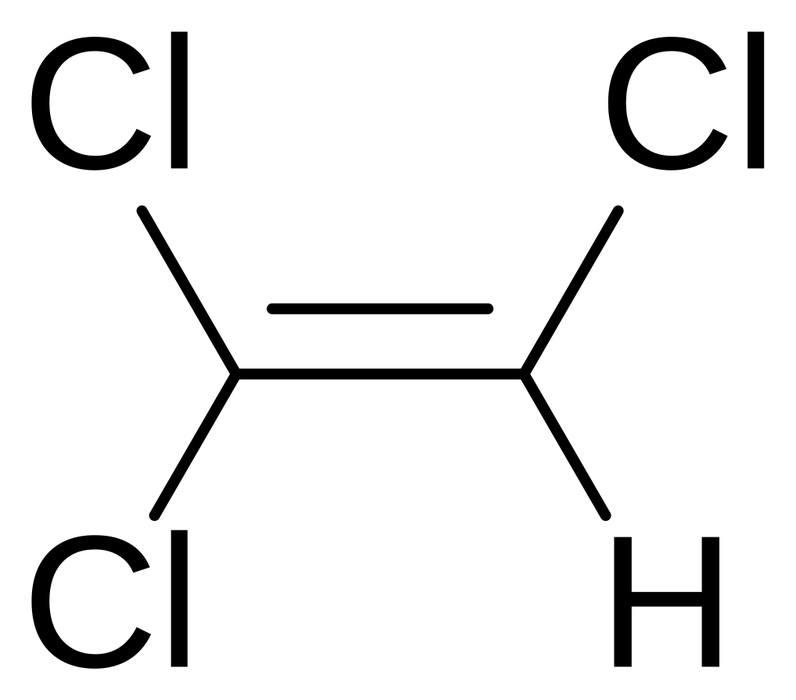
Structural formula of trichloroethylene.
Credit: Rhododendronbusch / Wikimedia Commons

License: Public domain
Rendered from SVG to PNG, whitespace trimmed and placed on white
What it is
Trichloroethylene (CAS 79-01-6) is a volatile, colourless liquid that does not occur naturally. [1,6] It was once used as a surgical anaesthetic, a use the US FDA banned in 1977. [1]
What it does and why it is used
It dissolves grease and oils, which made it useful as a degreasing solvent and in cleaning products, and it is a starting material for refrigerants. [1]
Regulatory status and health context
Canada
Canada's drinking water guideline sets a maximum acceptable concentration of 0.005 mg/L, based on heart malformations, and Health Canada lists the guideline as being updated. [4]
United States
In December 2024, EPA issued a final rule prohibiting most uses of TCE, including all consumer products, with some workplace uses phased out over a longer period under strict worker protections; EPA has since proposed extending some compliance dates while keeping the ban in place. [3] The US drinking water limit is 0.005 mg/L. [5]
European Union
The EU law website was not fully available when this article was reviewed, so EU legal status was not checked and is not summarized here.
Environmental notes
Trichloroethylene remains in the environment for a long time, moves readily through soil and can accumulate in groundwater. [1]
Quick facts
- CAS: 79-01-6. [6]
- Where: metal degreasing, some older cleaning and adhesive products, contaminated groundwater. [1]
- Main danger: kidney cancer. [1]
- Most at risk: exposed workers, people drinking contaminated water and pregnant people. [1,2]
Sources
All URLs were fetched on 2026-11-15; Health Canada pages were read with a separate web-reading tool because they did not respond to this review's direct requests. The EU law website was not fully available that day, so EU legislation could not be checked for this review. Source publication dates differ from this draft's review date.
- National Cancer Institute: Trichloroethylene.
- ATSDR: Public Health Statement for trichloroethylene.
- US EPA: Risk management for trichloroethylene (TCE).
- Health Canada: Guidelines for Canadian Drinking Water Quality, summary tables.
- US EPA: National Primary Drinking Water Regulations.
- PubChem PUG REST: trichloroethylene synonyms.