
Food and drinkNutrients and supplements
Sodium chloride: table salt, the everyday seasoning most of us eat too much of
CAS 7647-14-5.Also known as table salt, salt, and sea salt.
Editorial draft Last reviewed 15 November 2026 About 801 words
CC INDEX
How it works72/100 High
High sodium intake is a well-established cause of raised blood pressure, linked by WHO to cardiovascular disease and an estimated 1.7 million deaths a year. Nearly everyone eats salt daily, and average intakes exceed recommendations. Rules focus on labelling and voluntary reduction rather than limits, so the score sits in the high band.
An editorial summary of this article’s cited evidence. It isn’t medical advice or a personal risk estimate.
Age index
What is the age index?Which age groups are more affected by this chemical’s possible health issues, based on this article’s sources.
- Pregnancy Unborn babies Not well studied
- Infants 0 to 1 Moderate
- Young children 1 to 5 Moderate
- Children 6 to 12 Moderate
- Teens 13 to 19 Moderate
- Adults 20 to 64 Moderate
- Older adults 65 and over Higher concern
- Older adults (higher concern): Blood pressure and heart risk make sodium limits more important
- Health effects come from long-term intake rather than single exposures. Children have lower recommended amounts than adults, and people with high blood pressure, heart failure or kidney disease may be told to eat less.

Illustration of an everyday meal. Much of the sodium people eat comes from bread, soups, sauces and other prepared foods.
Credit: Chemical Century; AI-generated illustration
License: CC0 1.0
Illustration, not a photograph of a specific product. Resized and cropped for the web.
Salt is probably the most familiar chemical in any kitchen, and the body genuinely needs the sodium it provides. The catch is quantity: most adults eat well beyond what health agencies recommend, often without noticing, because much of it is already in bread, soups, sauces and ready meals. Over time, a high-sodium diet can raise blood pressure, which is a major risk for heart disease and stroke. Small, steady changes, like checking labels and cooking with herbs and spices, can make a real difference.
Everyday exposure: where you meet it and how much
Sodium chloride is table salt, the most common form of sodium in food, and table salt is 40% sodium by weight. [1] One teaspoon of table salt contains about 2,300 mg of sodium. [1]
Most dietary sodium does not come from the salt shaker: FDA says over 70% comes from packaged and prepared foods. [3] Health Canada lists soups, cheese, breakfast cereals, snack foods, baked goods, processed meats, ready meals and sauces among the main sources, and says most Canadians eat too much sodium. [4] WHO estimates that the global average adult intake was 4,278 mg of sodium a day in 2021, more than double its recommendation. [2]
Known and suspected harms
Evidence labels are editorial summaries, not individual risk predictions: established means recognized under the stated conditions; probable means a likely contribution with uncertainty; possible means limited evidence; disputed means assessors disagree. These labels do not describe how common an effect is.
- Established — raised blood pressure: diets high in sodium are associated with a higher risk of high blood pressure, which is a major cause of stroke and heart disease. [3,4]
- Established — wider health burden: WHO links high sodium intake, through raised blood pressure, to cardiovascular diseases and also lists gastric cancer, obesity, osteoporosis, Ménière's disease and kidney disease among associated conditions; it estimates 1.7 million deaths a year were associated with too much sodium in 2023. [2]
- Established — fluid buildup in some illnesses: MedlinePlus notes that too much sodium can cause a dangerous buildup of fluid in people with heart failure, liver cirrhosis or kidney disease. [1]
Reducing avoidable exposure and harm
Check the sodium on nutrition labels and choose lower-sodium versions of bread, soups, sauces and processed meats. [3,4] WHO suggests cooking with little or no added salt, flavouring food with herbs and spices, limiting commercial sauces and instant products, and, where table salt is used, choosing lower-sodium salt substitutes that contain potassium and making sure salt is iodized. [2] People with kidney disease or on certain medicines should ask a clinician before using potassium salt substitutes.
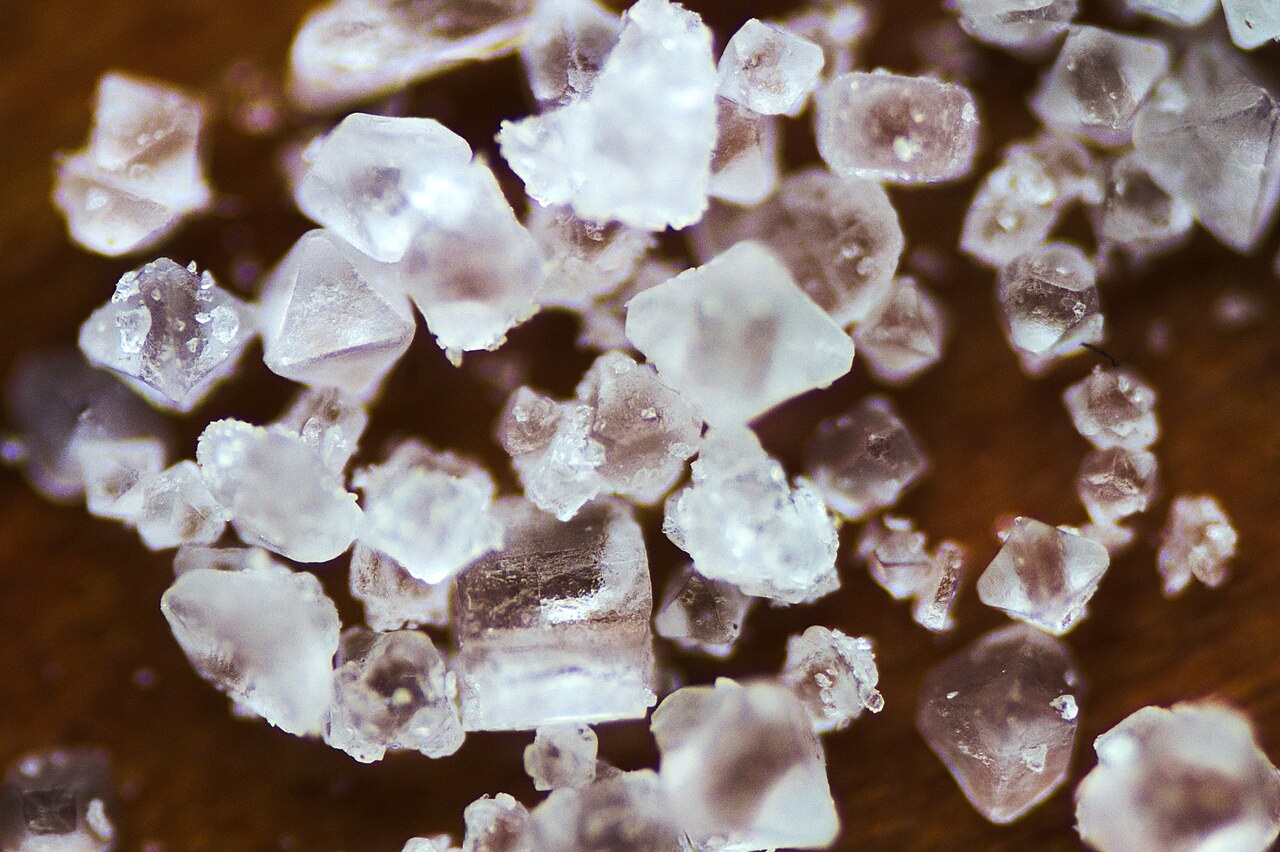
Sodium chloride crystals.
Credit: Stanislav.nevyhosteny / Wikimedia Commons

License: CC BY-SA 4.0
Resized for the web; no content edits
What it is
Sodium chloride (CAS 7647-14-5) is the crystalline salt of sodium and chlorine known as table salt. [1,6]
What it does and why it is used
The body needs sodium to control blood pressure and blood volume and for muscles and nerves to work properly. [1] In food, salt adds flavour and is used in processing and preserving many products. [1,3]
Regulatory status and health context
Canada
Health Canada encourages Canadians to reduce sodium and to use the nutrition facts table to compare products. [4] Canada's Food and Drug Regulations prohibit adding sodium chloride to infant foods made of strained fruit, fruit juice, fruit drink or cereal, with an exception for strained desserts. [5]
United States
FDA sets the Daily Value for sodium at less than 2,300 mg per day and notes that Americans eat on average about 3,400 mg a day. [3] MedlinePlus advises healthy adults to limit sodium to 2,300 mg a day and adults with high blood pressure to no more than 1,500 mg. [1]
European Union
The EU law website was not fully available when this article was reviewed, so EU legal status was not checked and is not summarized here.
Environmental notes
The sources used for this review focus on diet and do not assess sodium chloride's environmental effects, so we do not summarize them here.
Quick facts
- CAS: 7647-14-5. [6]
- Where: table salt and most packaged and prepared foods. [1,3]
- Main danger: raised blood pressure from long-term high intake. [2,3]
- Most at risk: people with high blood pressure, heart failure, cirrhosis or kidney disease. [1]
Sources
All URLs were fetched on 2026-11-15; Health Canada pages were read with a separate web-reading tool because they did not respond to this review's direct requests. The EU law website was not fully available that day, so EU legislation could not be checked. Source publication dates differ from this draft's review date.