
Nutrients and supplementsWater, air and residues
Selenium: the trace nutrient in Brazil nuts, and how much is too much
CAS 7782-49-2.Also known as selenomethionine and sodium selenite.
Editorial draft Last reviewed 15 November 2026 About 715 words
CC INDEX
How it works40/100 Mild
Too much selenium over time can cause hair and nail loss and nerve problems, and very high intakes can be fatal in rare cases. Most exposure is from food, with extra from supplements and Brazil nuts. Upper limits and drinking-water limits in Canada and the US guide intake, so the score sits in the mild band.
An editorial summary of this article’s cited evidence. It isn’t medical advice or a personal risk estimate.
Age index
What is the age index?Which age groups are more affected by this chemical’s possible health issues, based on this article’s sources.
- Pregnancy Unborn babies Lower concern
- Infants 0 to 1 Lower concern
- Young children 1 to 5 Moderate
- Children 6 to 12 Lower concern
- Teens 13 to 19 Lower concern
- Adults 20 to 64 Lower concern
- Older adults 65 and over Lower concern
- Upper limits are lower for children, from 45 mcg a day for young babies to 90 mcg at ages 1 to 3 and 280 mcg at ages 9 to 13; the adult limit is 400 mcg.

Illustration of selenium foods. Brazil nuts, eggs and grains provide selenium.
Credit: Chemical Century; AI-generated illustration
License: CC0 1.0
Illustration, not a photograph of a specific product. Resized and cropped for the web.
Selenium is a nutrient the body needs in small amounts, mainly from seafood, meat, eggs, grains and nuts. Brazil nuts are so rich in it that eating too many can push intake over the upper limit. Getting too much over time may cause garlic breath, hair loss and brittle nails. Most people get enough from food, and supplements have not been shown to lower prostate cancer or heart disease risk in people who already do.
Everyday exposure: where you meet it and how much
Selenium is found in fish and other seafood, beef, pork, poultry, eggs, dairy, breads, cereals and other grains, beans, lentils and nuts. [1] Brazil nuts contain 68 to 91 mcg per nut, so five nuts provide roughly 340 to 455 mcg. [1] Supplements may contain selenomethionine, selenium-enriched yeast, sodium selenite or sodium selenate. [1] Health Canada notes that most selenium exposure is from food and there is little information on its toxicity from drinking water. [2]
Known and suspected harms
Evidence labels are editorial summaries, not individual risk predictions: established means recognized under the stated conditions; probable means a likely contribution with uncertainty; possible means limited evidence; disputed means assessors disagree. These labels do not describe how common an effect is.
- Established — too much over time: excess selenium can cause garlic breath, a metallic taste, hair loss, brittle nails or nail loss, skin rash, nausea, diarrhea, extreme tiredness, irritability and nervous system problems. [1]
- Established — very high intakes: very high amounts can cause severe stomach and nervous system problems, difficulty breathing, tremors, kidney or heart failure and heart attacks, and in rare cases death. [1]
- Probable — no prevention benefit: selenium supplements do not lower the risk of prostate cancer and do not seem to reduce the risk of heart disease, especially in people who get enough selenium from food. [1]
- Established — drinking water: the US EPA lists hair or fingernail loss, numbness in fingers or toes and circulatory problems as possible effects of long-term exposure above its drinking-water limit. [3]
Reducing avoidable exposure and harm
Count Brazil nuts and supplements together when thinking about the adult upper limit of 400 mcg a day, which covers food, drinks and supplements. [1] The upper limits do not apply if you take selenium under a doctor's care. [1]
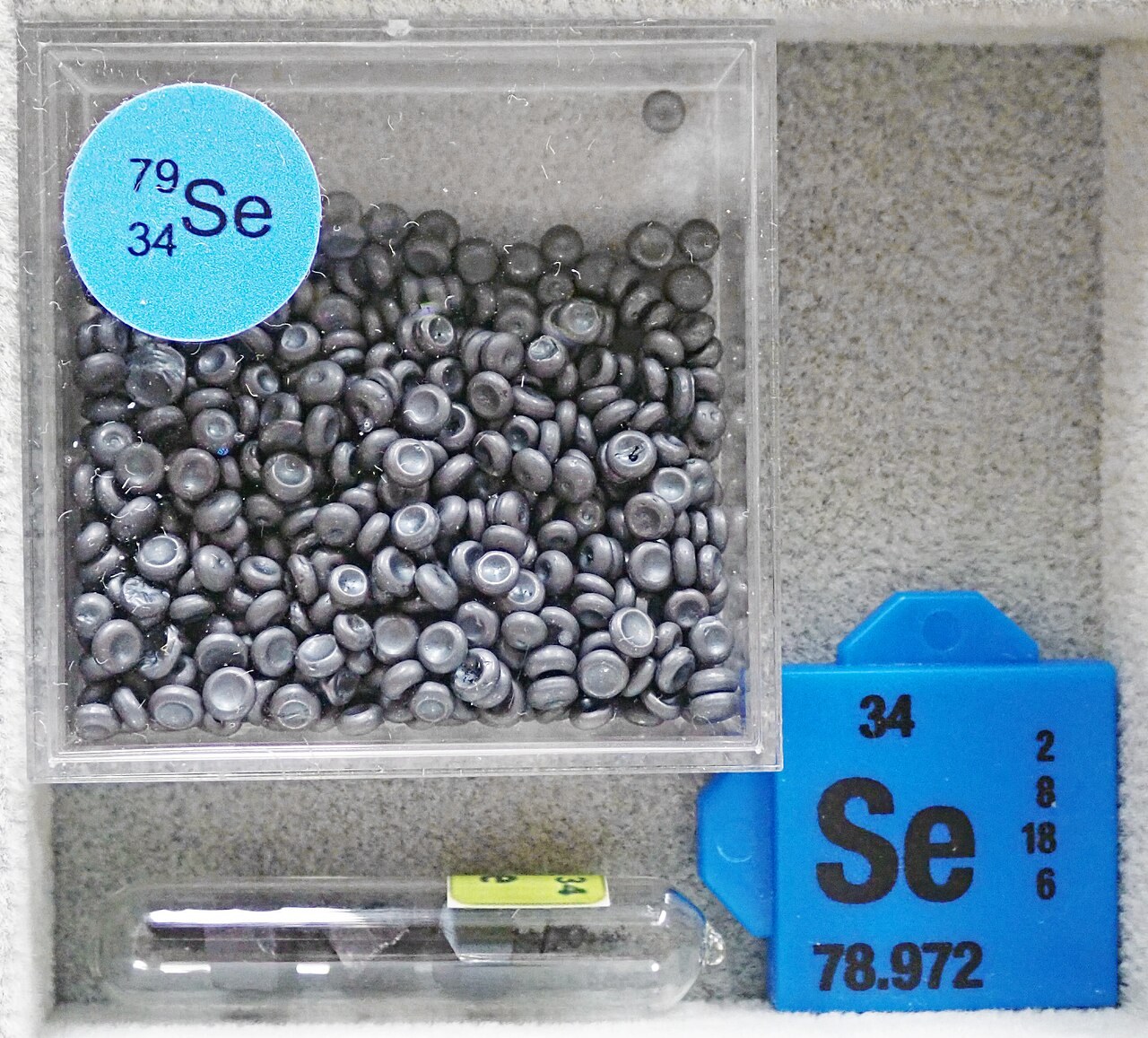
A sample of elemental selenium.
Credit: James St. John / Wikimedia Commons

License: CC BY 2.0
Resized for the web; no content edits
What it is
Selenium (CAS 7782-49-2) is an essential nutrient element. [1,2,4]
What it does and why it is used
The thyroid gland needs selenium to make hormones, and the body also needs it for reproduction, making DNA, protecting cells and resisting infection. [1]
Regulatory status and health context
Canada
Health Canada's drinking-water guideline sets a maximum acceptable concentration of 0.05 mg/L for selenium. [2]
United States
The US EPA's drinking-water limit for selenium is 0.05 mg/L. [3] The NIH Office of Dietary Supplements lists an adult upper limit of 400 mcg a day from all sources. [1]
European Union
The EU law website was not fully available when this article was reviewed, so EU legal status was not checked and is not summarized here. The NIH fact sheet notes that the European Food Safety Authority set a lower adult upper limit of 255 mcg a day in 2023. [1]
Environmental notes
Health Canada lists erosion and weathering of rocks and soils, coal ash from coal-fired power plants, and mining and refining of copper and other metals as sources of selenium in drinking water. [2]
Quick facts
- CAS: 7782-49-2. [4]
- Where: seafood, meat, grains, Brazil nuts, supplements. [1]
- Main concern: too much from supplements or Brazil nuts. [1]
- Most at risk: people who take supplements and eat many Brazil nuts. [1]
Sources
All URLs were fetched on 2026-11-15; NIH Office of Dietary Supplements and Health Canada pages were read with a separate web-reading tool because they did not respond to this review's direct requests. The EU law website was not fully available that day, so EU legislation could not be checked. Source publication dates differ from this draft's review date.