
Water, air and residuesHousehold materials
Radon: the invisible home gas that is worth testing for
CAS 10043-92-2.Also known as radon gas, radon-222, and radon progeny.
Editorial draft Last reviewed 15 November 2026 About 813 words
CC INDEX
How it works78/100 High
Radon is a proven cause of lung cancer and the second leading cause of the disease in the US. It is present in nearly all air, and some homes have high levels without anyone knowing. Testing and fixes are well established and guidelines exist, so the score sits in the high band.
An editorial summary of this article’s cited evidence. It isn’t medical advice or a personal risk estimate.
Age index
What is the age index?Which age groups are more affected by this chemical’s possible health issues, based on this article’s sources.
- Pregnancy Unborn babies Not well studied
- Infants 0 to 1 Moderate
- Young children 1 to 5 Moderate
- Children 6 to 12 Moderate
- Teens 13 to 19 Moderate
- Adults 20 to 64 Higher concern
- Older adults 65 and over Higher concern
- Adults (higher concern): Years of exposure raise lung cancer risk, especially in smokers
- Older adults (higher concern): Years of exposure raise lung cancer risk, especially in smokers
- ATSDR notes that children's smaller lungs and faster breathing may give higher estimated doses to the lungs, but limited evidence does not show children are more susceptible. Risk builds with long-term exposure and is much greater for smokers.

Illustration of a basement living area with a radon test device. Testing is the only way to know a home's radon level.
Credit: Chemical Century; AI-generated illustration
License: CC0 1.0
Illustration, not a photograph of a specific product. Resized and cropped for the web.
Radon is a natural gas that seeps up from the ground, and you cannot see, smell or taste it. It can collect in basements and lower floors, and levels vary from one home to the next depending on the soil and how easily the gas gets in. Breathing high levels for many years raises the risk of lung cancer, especially for people who smoke. The reassuring part is that testing is easy and inexpensive, and homes with high readings can usually be fixed.
Everyday exposure: where you meet it and how much
Radon is present in nearly all air, and everyone breathes in some every day, usually at very low levels. [1] It can enter homes through cracks in floors, walls and foundations, and it can also come from building materials or from well water that contains radon. [1] Basements and first floors usually have the highest levels because they are closest to the ground. [1]
A US survey estimated that about 1 in 15 US homes has radon at or above the EPA action level. [1,3] Levels can be higher in homes that are well insulated or tightly sealed, or built on soil rich in uranium, thorium and radium. [1]
Known and suspected harms
Evidence labels are editorial summaries, not individual risk predictions: established means recognized under the stated conditions; probable means a likely contribution with uncertainty; possible means limited evidence; disputed means assessors disagree. These labels do not describe how common an effect is.
- Established — lung cancer: long-term exposure to radon can lead to lung cancer, the only cancer proven to be linked to inhaling radon. [1] EPA estimates radon causes about 21,000 lung cancer deaths a year in the US, about 2,900 of them among people who have never smoked. [2]
- Established — combined effect with smoking: exposure to both radon and cigarette smoke creates a greater lung cancer risk than either alone, and most radon-related lung cancer deaths occur among smokers. [1,3]
- Possible — leukemia: there has been a suggestion of increased leukemia risk with radon exposure in adults and children, but NCI says the evidence is not conclusive. [1]
Reducing avoidable exposure and harm
Test your home: testing is the only way to know whether radon levels are high, and tests are relatively easy to use and inexpensive. [1] If levels are high, a sub-slab suction system, which uses a fan to draw radon from under the house and vent it outdoors, can reduce them; sealing openings to the soil helps it work better. [3] Not smoking greatly lowers the lung cancer risk from radon. [1,3]
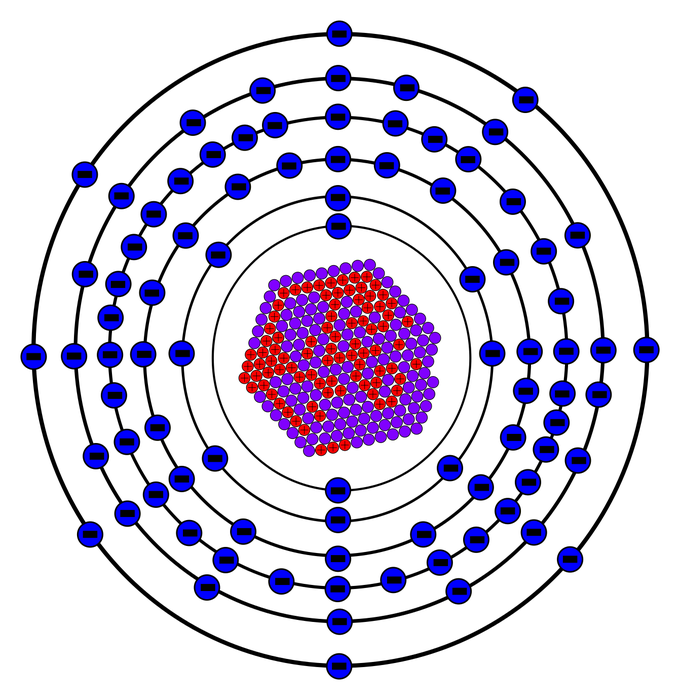
Diagram of a radon-222 atom.
Credit: SM358 / Wikimedia Commons

License: Public domain
Rendered from SVG to PNG, whitespace trimmed and placed on white
What it is
Radon (CAS 10043-92-2) is a radioactive gas released by the natural decay of uranium, thorium and radium in rocks and soil. [1,5] It is invisible, odourless and tasteless. [1] As it decays it forms other radioactive elements, called radon progeny, until it becomes stable lead. [3]
What it does and why it is used
Radon has no everyday consumer use; people meet it because it seeps up from the ground and collects indoors. [1]
Regulatory status and health context
Canada
Canada's radon guideline is 200 becquerels per cubic metre (Bq/m³). [4] Health Canada recommends corrective action within 1 year if a home's level is above the guideline, and sooner the higher the level; it also says no level is risk-free. [4] The guideline also applies to schools, hospitals, long-term care homes and other public buildings and workplaces. [4]
United States
EPA recommends fixing a home with radon at or above 4 picocuries per litre (pCi/L), or 150 Bq/m³, and considering fixes between 2 and 4 pCi/L. [1,2]
European Union
The EU law website was not fully available when this article was reviewed, so EU legal status was not checked and is not summarized here.
Environmental notes
Radon comes from natural sources in rocks and soil, usually exists at very low levels outdoors, and can dissolve into groundwater in some areas. [1] The sources used for this review do not assess wider environmental effects, so we do not summarize them here.
Quick facts
- CAS: 10043-92-2. [5]
- Where: indoor air, especially basements and lower floors. [1]
- Main danger: lung cancer after long-term exposure. [1,2]
- Most at risk: smokers and people in homes with high levels. [1,2]
Sources
All URLs were fetched on 2026-11-15; Health Canada pages were read with a separate web-reading tool because they did not respond to this review's direct requests. The EU law website was not fully available that day, so EU legislation could not be checked for this review. Source publication dates differ from this draft's review date.