
Household materialsWater, air and residues
Propane: the home fuel gas, and what happens if you breathe it in
CAS 74-98-6.Also known as LPG and liquefied petroleum gas.
Editorial draft Last reviewed 15 November 2026 About 564 words
CC INDEX
How it works40/100 Mild
Breathing in propane can make breathing difficult and long exposure may cause stroke, coma or death, and the gas is extremely flammable. It is a common home and industrial fuel. Hazard classification rules require flammability warnings, so the score sits in the mild band.
An editorial summary of this article’s cited evidence. It isn’t medical advice or a personal risk estimate.
Age index
What is the age index?Which age groups are more affected by this chemical’s possible health issues, based on this article’s sources.
- Pregnancy Unborn babies Lower concern
- Infants 0 to 1 Lower concern
- Young children 1 to 5 Lower concern
- Children 6 to 12 Lower concern
- Teens 13 to 19 Lower concern
- Adults 20 to 64 Lower concern
- Older adults 65 and over Lower concern
- The sources used for this review do not give age-specific advice on propane.

Illustration of a propane tank and grill. Propane is a flammable fuel gas.
Credit: Chemical Century; AI-generated illustration
License: CC0 1.0
Illustration, not a photograph of a specific product. Resized and cropped for the web.
Propane is a flammable gas used in homes to heat water and run cooking appliances and clothes dryers. Breathing it in can be harmful because propane takes the place of oxygen in the lungs. Touching the liquid can cause frostbite-like injuries. Almost all hazard classifications list it as an extremely flammable gas, and some note it is stored under pressure.
Everyday exposure: where you meet it and how much
Propane is used in homes as fuel for heating water, cooking appliances and drying clothes, as fuel for forklifts and other equipment in construction and factories, and in agriculture to dry grain crops. [1] It is a flammable gas that can turn into a liquid under very cold temperatures. [1]
Known and suspected harms
Evidence labels are editorial summaries, not individual risk predictions: established means recognized under the stated conditions; probable means a likely contribution with uncertainty; possible means limited evidence; disputed means assessors disagree. These labels do not describe how common an effect is.
- Established — breathing it in: propane takes the place of oxygen in the lungs, which makes breathing difficult or impossible; symptoms can include dizziness, headache, irregular or rapid heartbeat, slow and shallow breathing, convulsions and loss of consciousness. [1]
- Established — exposure length: short exposures may cause temporary headaches or other mild nervous system symptoms, while stroke, coma or death may occur with long-term exposure. [1]
- Established — liquid contact: touching liquid propane results in frostbite-like symptoms. [1]
- Established — hazard classification: 99.5% of reports classify it as an extremely flammable gas and 39.1% as a gas under pressure that may explode if heated. [2] Percentages are shares of company reports to the European Chemicals Agency's classification inventory, as compiled by PubChem.
Reducing avoidable exposure and harm
If someone breathed in propane, move them to fresh air right away, and call the local emergency number if they do not improve rapidly. [1] If it is on the skin or in the eyes, flush with lots of water for at least 15 minutes. [1]
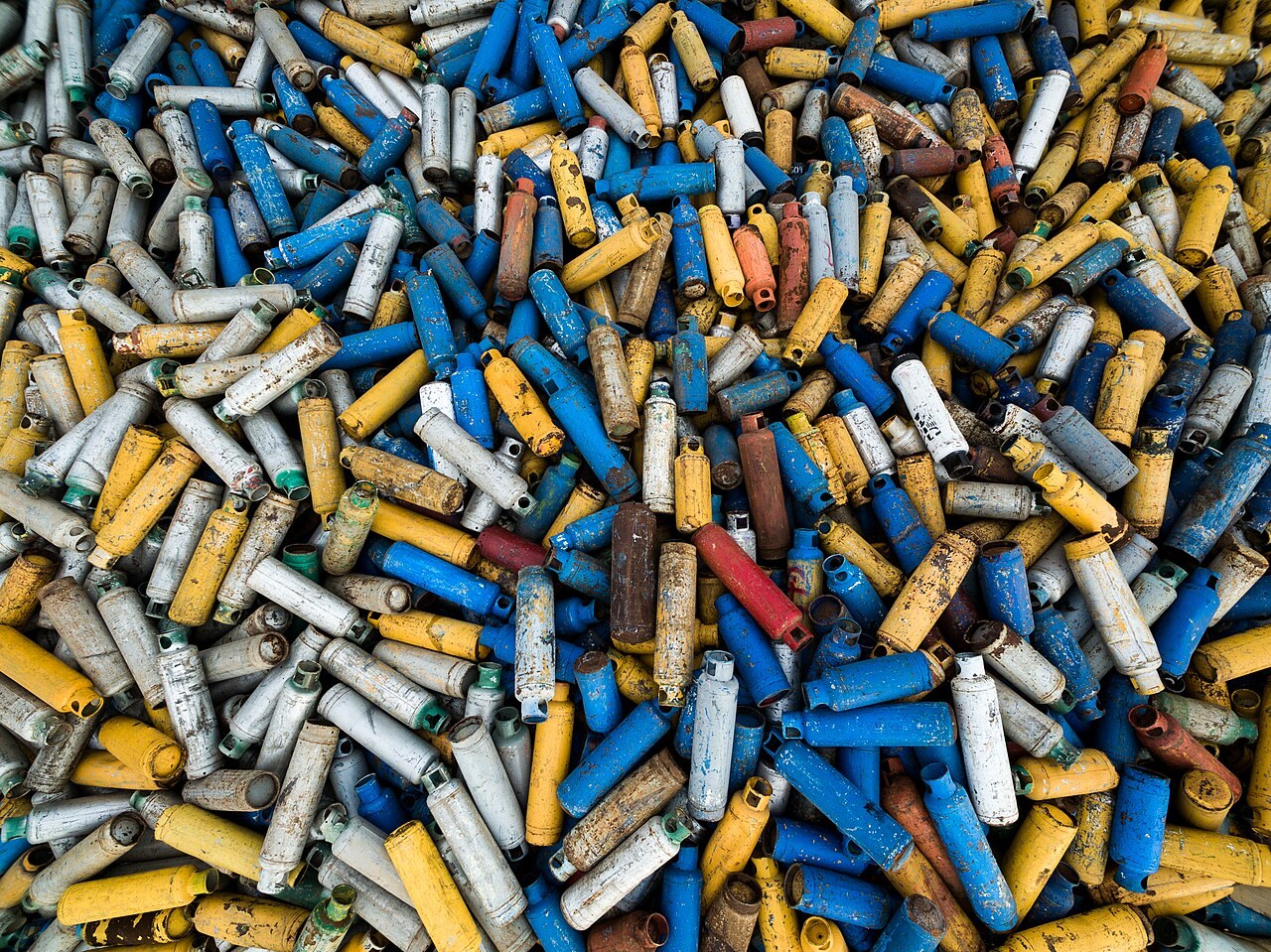
Small propane gas cylinders.
Credit: Tomascastelazo / Wikimedia Commons

License: CC BY-SA 4.0
Resized for the web; no content edits
What it is
Propane (CAS 74-98-6) is a flammable gas. [1,3]
What it does and why it is used
It burns as a fuel for heating, cooking, drying and powering equipment. [1]
Regulatory status and health context
Canada
The sources used for this review do not summarize Canadian rules for propane, so we do not describe them here.
United States
The sources used for this review do not describe US rules specific to propane.
European Union
The EU law website was not fully available when this article was reviewed, so EU legal status was not checked and is not summarized here.
Environmental notes
The sources used for this review do not assess propane's environmental effects, so we do not summarize them here.
Quick facts
- CAS: 74-98-6. [3]
- Where: home heating, cooking and drying appliances; equipment fuel. [1]
- Main concern: oxygen displacement if inhaled; flammability. [1,2]
- Most at risk: no specific group identified in the sources used.
Sources
All URLs were fetched on 2026-11-15. The EU law website was not fully available that day, so EU legislation could not be checked for this review. Source publication dates differ from this draft's review date.