
Household materialsWater, air and residues
PBDEs: phased-out flame retardants that linger in household dust
Also known as polybrominated diphenyl ethers, pentaBDE, octaBDE, and decaBDE.
Editorial draft Last reviewed 14 November 2026 About 837 words
CC INDEX
How it works46/100 Moderate
Animal studies show neurobehavioral, thyroid and liver effects, and human studies suggest an association with altered neurodevelopment, but nothing definite is known in people. Exposure through household dust remains widespread because older products still contain PBDEs. Manufacture has been phased out in the US and restricted in the EU, so the score sits in the moderate band.
An editorial summary of this article’s cited evidence. It isn’t medical advice or a personal risk estimate.
Age index
What is the age index?Which age groups are more affected by this chemical’s possible health issues, based on this article’s sources.
- Pregnancy Unborn babies Not well studied
- Infants 0 to 1 Higher concern
- Young children 1 to 5 Higher concern
- Children 6 to 12 Not well studied
- Teens 13 to 19 Not well studied
- Adults 20 to 64 Lower concern
- Older adults 65 and over Not well studied
- Infants (higher concern): Higher exposure than older children and adults
- Young children (higher concern): Higher exposure from dust and hand-to-mouth activity
- Breast milk can carry PBDEs, but ATSDR says any risks are generally outweighed by the benefits of breastfeeding.

Illustration of dusting and vacuuming in a living room. Most PBDE exposure comes from household dust.
Credit: Chemical Century; AI-generated illustration
License: CC0 1.0
Illustration, not a photograph of a specific product. Resized and cropped for the web.
PBDEs are flame retardants that were mixed into the foam of older sofas and armchairs and the plastic cases of televisions and computers. They are no longer made in the United States, but because they are not bound tightly to those products, they slowly escape into household dust, which is how most people take them in today. Toddlers, who often put their hands in their mouths, tend to have higher exposure than adults. Animal studies, and some human studies, suggest PBDEs may affect the developing brain, though nothing definite is known about effects in people, and simple habits like hand washing and regular vacuuming can help.
Everyday exposure: where you meet it and how much
PBDEs are flame-retardant chemicals that were added to consumer products to make them hard to burn: pentaBDE mainly in foam for upholstery, octaBDE in plastics for business equipment and decaBDE in electronic enclosures such as television cabinets. [1] Even after they were phased out, many products still contain them, including older televisions, computers and furniture with polyurethane foam. [1]
PBDEs are not chemically bound to the plastics, foam and fabrics they are used in, so they can leach out. [2] Swallowing house dust, and to a lesser degree skin contact with it, accounts for 80 to 90% of the general population's exposure; most of the rest comes from fatty foods such as fatty fish. [1] In breastfeeding infants, breast milk may be a major source. [1]
Known and suspected harms
Evidence labels are editorial summaries, not individual risk predictions: established means recognized under the stated conditions; probable means a likely contribution with uncertainty; possible means limited evidence; disputed means assessors disagree. These labels do not describe how common an effect is.
- Possible — effects on the developing brain: rats and mice exposed early in development had neurobehavioral changes, and evidence from human studies is suggestive of an association between PBDE exposure and altered neurodevelopment. [1] EPA names neurobehavioral effects as its critical health concern. [2]
- Established — other effects in animals: animals given PBDEs had thyroid and liver effects and reproductive system damage, and some studies suggest immune effects. [1] Evidence from human studies for effects other than on the developing nervous system is inconclusive or absent. [1]
- Disputed — cancer: nothing definite is known about cancer in people; liver tumours developed in rodents fed extremely large amounts of decaBDE, IARC considers PBDEs not classifiable, and EPA describes suggestive evidence for decaBDE only. [1]
Reducing avoidable exposure and harm
Regular hand washing may reduce PBDEs swallowed from dust on the hands, and regular vacuuming and cleaning of air ducts and filters can lower indoor dust levels. [1] Replacing older televisions, computers and foam furniture with newer products that do not contain PBDEs may also lower exposure at home. [1] Breastfeeding remains recommended: ATSDR says any risks from PBDEs in breast milk are generally outweighed by its benefits, and parents with concerns can talk to a health care provider. [1]
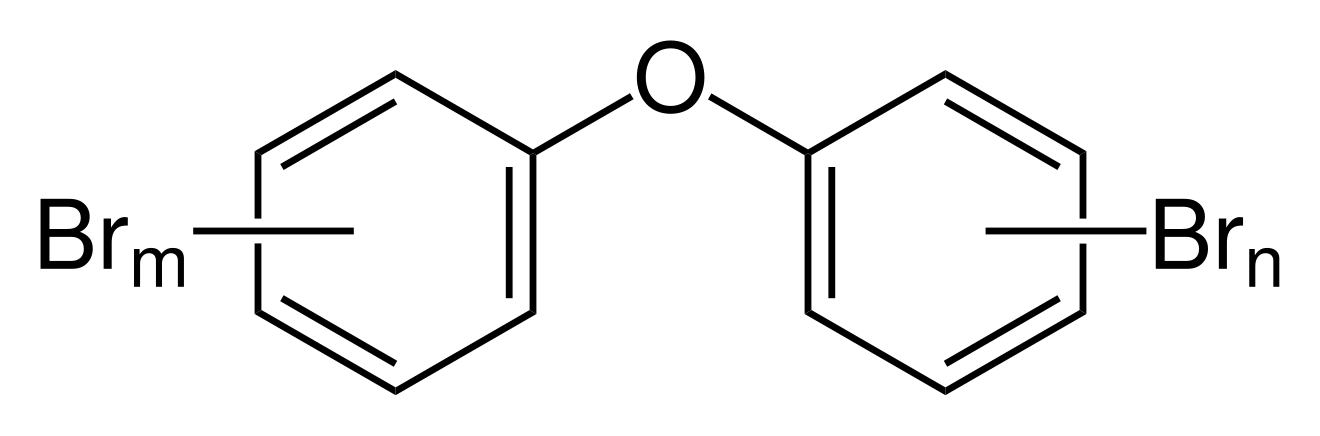
General structure of a polybrominated diphenyl ether.
Credit: Leyo, Rhododendronbusch / Wikimedia Commons

License: Public domain
Rendered from SVG to PNG, whitespace trimmed and placed on white
What it is
PBDEs are a family of 209 related brominated chemicals, sold as three main commercial mixtures, pentaBDE, octaBDE and decaBDE, so no single CAS number covers them. [1] Lower-brominated PBDEs can stay in the body for many years, stored mainly in fat. [1]
What it does and why it is used
They were added to foam, plastics and electronics to slow the spread of fire. [1]
Regulatory status and health context
Canada
The sources used for this review do not cover PBDEs' status in Canada, so we do not summarize it here.
United States
PentaBDE and octaBDE were withdrawn from the US market at the end of 2004. [1,2] EPA secured commitments from the main makers and importers of decaBDE to end all sales by December 31, 2013, and EPA rules treat new uses of these chemicals as significant new uses that require notice to EPA. [2]
European Union
ATSDR reports that a 2003 EU directive banned the marketing and use of pentaBDE and octaBDE from 2004, and that decaBDE use was restricted under EU hazardous-substances rules for electronics in 2008. [1] The EU legal texts themselves were not reviewed for this article.
Environmental notes
PBDEs bind to sediment and soil, which are major sinks, and are found at low levels in fish, meat and dairy products. [1] EPA considers certain PBDEs persistent, bioaccumulative and toxic, and says wildlife exposure in some cases may be at or near levels that cause harm. [2]
Quick facts
- CAS: not applicable; a family of 209 related chemicals. [1]
- Where: older foam furniture, televisions and computers; household dust; fatty foods. [1]
- Main danger: possible effects on the developing brain. [1,2]
- Most at risk: infants and toddlers, who have higher exposure. [1]
Sources
All URLs were fetched on 2026-11-14. Source publication dates differ from this draft's review date.