
Water, air and residuesHousehold materials
Ozone: the summer smog gas that is hard on lungs
CAS 10028-15-6.Also known as ground-level ozone, O3, and smog.
Editorial draft Last reviewed 15 November 2026 About 748 words
CC INDEX
How it works68/100 High
Ozone reliably irritates and inflames the airways and worsens asthma, and long-term exposure is likely one cause of asthma. Almost everyone breathes it on high-ozone days. Outdoor air standards and forecasts exist, so the score sits in the high band.
An editorial summary of this article’s cited evidence. It isn’t medical advice or a personal risk estimate.
Age index
What is the age index?Which age groups are more affected by this chemical’s possible health issues, based on this article’s sources.
- Pregnancy Unborn babies Not well studied
- Infants 0 to 1 Moderate
- Young children 1 to 5 Higher concern
- Children 6 to 12 Higher concern
- Teens 13 to 19 Moderate
- Adults 20 to 64 Moderate
- Older adults 65 and over Higher concern
- Young children (higher concern): Developing lungs and outdoor play put children at greatest risk
- Children (higher concern): Developing lungs and outdoor play put children at greatest risk
- Older adults (higher concern): EPA lists older adults among those most at risk from ozone
- EPA says children are at greatest risk because their lungs are still developing, they are more often active outdoors when ozone is high and they are more likely to have asthma. Older adults, people with asthma and outdoor workers are also at higher risk.

Illustration of outdoor exercise on a hazy summer day. Ground-level ozone tends to be highest on hot, sunny afternoons.
Credit: Chemical Century; AI-generated illustration
License: CC0 1.0
Illustration, not a photograph of a specific product. Resized and cropped for the web.
High in the sky, ozone shields us from the sun's ultraviolet rays, but down at ground level it is a main part of summer smog. It forms when exhaust and industrial pollution react in sunshine, so levels tend to climb on hot, bright afternoons. Breathing it can make it harder to take a deep breath and can trigger asthma attacks, especially in children and people who are active outdoors. Checking the daily air quality forecast and planning hard exercise for cleaner hours can help.
Everyday exposure: where you meet it and how much
Ground-level ozone is not emitted directly; it forms when nitrogen oxides and volatile organic compounds from cars, power plants, industrial boilers, refineries and chemical plants react in sunlight. [1] It is most likely to reach unhealthy levels on hot, sunny days in cities, but wind can carry it far, so rural areas can have high levels too. [1]
Indoors, some devices sold as air cleaners deliberately produce ozone, and studies show their output can exceed health standards even when used as directed. [3]
Known and suspected harms
Evidence labels are editorial summaries, not individual risk predictions: established means recognized under the stated conditions; probable means a likely contribution with uncertainty; possible means limited evidence; disputed means assessors disagree. These labels do not describe how common an effect is.
- Established — airway irritation: depending on the level, ozone can cause coughing and a sore throat, make it harder to breathe deeply, and inflame and damage the airways. [2]
- Established — asthma and lung disease: ozone can make the lungs more prone to infection, aggravate asthma, emphysema and chronic bronchitis, and increase asthma attacks, leading to more medication use, emergency visits and hospital admissions. [2]
- Probable — asthma development: long-term exposure is linked to aggravation of asthma and is likely one of many causes of asthma developing. [2]
- Established — ozone air cleaners: EPA says ozone at levels that do not exceed public health standards is generally ineffective at cleaning indoor air, and reactions with indoor chemicals can create other irritating by-products. [3]
Reducing avoidable exposure and harm
Check daily air quality reports, which use the Air Quality Index, and plan strenuous outdoor activity for times when ozone is lower. [2] EPA advises using proven methods to clean indoor air, such as controlling pollution sources and increasing outdoor air ventilation, rather than ozone generators. [3]
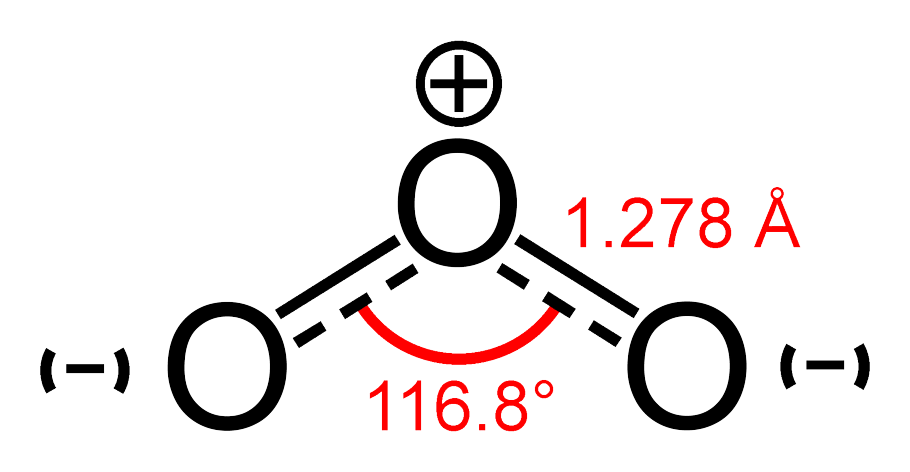
Structure of ozone (O3).
Credit: Ben Mills / Wikimedia Commons

License: Public domain
Whitespace trimmed and placed on white
What it is
Ozone (CAS 10028-15-6) is a gas made of three oxygen atoms. [1,3,6] In the upper atmosphere it protects living things from the sun's ultraviolet radiation; at ground level it is a harmful air pollutant. [1]
What it does and why it is used
Ground-level ozone has no intended use; it is a by-product of air pollution. [1] Its reactivity is the basis for claims made for ozone-generating air cleaners. [3]
Regulatory status and health context
Canada
This review did not check Canadian ozone standards, so they are not summarized here.
United States
EPA's national outdoor air standard for ozone is 0.070 ppm, based on the annual fourth-highest daily maximum 8-hour average. [4]
European Union
The EU air quality directive, as originally published in 2008, set a target value of 120 µg/m³ as a maximum daily 8-hour mean, not to be exceeded on more than 25 days a year averaged over three years. [5] Later changes were not checked for this review.
Environmental notes
Elevated ozone can harm sensitive vegetation and ecosystems, including forests, parks and wilderness areas, particularly during the growing season. [1]
Quick facts
- CAS: 10028-15-6. [6]
- Where: outdoor smog on hot, sunny days; some ozone-generating air cleaners. [1,3]
- Main danger: airway irritation and asthma attacks. [2]
- Most at risk: children, older adults, people with asthma and outdoor workers. [2]
Sources
All URLs were fetched on 2026-11-15, except the EU air quality directive: the EU law website was not fully available that day, so it was read from a copy fetched for earlier Chemical Century articles in November 2026. That copy is the directive as originally published in 2008, and later amendments or replacements were not checked. Source publication dates differ from this draft's review date.