
Fragrance and flavourMedicines and health
Methyl salicylate: oil of wintergreen soothes sore muscles but is highly poisonous if swallowed
CAS 119-36-8.Also known as oil of wintergreen and wintergreen oil.
Editorial draft Last reviewed 14 November 2026 About 737 words
CC INDEX
How it works66/100 High
Swallowed methyl salicylate causes well-documented salicylate poisoning, and MedlinePlus calls it the most poisonous form of salicylate. It is common in muscle rubs and some mouthwashes, but harmful exposure needs swallowing. US packaging rules and Canadian cosmetic limits apply, so the score sits in the high band.
An editorial summary of this article’s cited evidence. It isn’t medical advice or a personal risk estimate.
Age index
What is the age index?Which age groups are more affected by this chemical’s possible health issues, based on this article’s sources.
- Pregnancy Unborn babies Not well studied
- Infants 0 to 1 Not well studied
- Young children 1 to 5 Higher concern
- Children 6 to 12 Moderate
- Teens 13 to 19 Moderate
- Adults 20 to 64 Moderate
- Older adults 65 and over Moderate
- Young children (higher concern): More than a tiny swallow of wintergreen oil is very dangerous
- Poisoning comes from swallowing; the sources describe skin products used as directed for pain relief rather than as a hazard.

Illustration of wintergreen and a muscle-rub tube. Methyl salicylate is the main component of oil of wintergreen.
Credit: Chemical Century; AI-generated illustration
License: CC0 1.0
Illustration, not a photograph of a specific product. Resized and cropped for the web.
The warming feel of a muscle rub and the wintergreen scent of some mouthwashes often come from methyl salicylate, better known as oil of wintergreen. Rubbed on sore shoulders as directed, it is a familiar comfort for many households. Swallowed, it acts like a large overdose of aspirin, a chemical relative, and more than a tiny amount of the pure oil is very dangerous, bringing vomiting, ringing ears, confusion or seizures. That is why child-resistant caps and careful storage matter so much for anything that smells of wintergreen.
Everyday exposure: where you meet it and how much
Methyl salicylate, or oil of wintergreen, smells like wintergreen and is used in many over-the-counter products, including deep-heating creams for sore muscles and joints, solutions for vaporizers and mouthwash. [1] Wintergreen products for the skin create a feeling of warmth because they make blood vessels widen. [2]
Overdose happens when someone swallows a dangerous amount of a product containing it, by accident or on purpose. [1]
Known and suspected harms
Evidence labels are editorial summaries, not individual risk predictions: established means recognized under the stated conditions; probable means a likely contribution with uncertainty; possible means limited evidence; disputed means assessors disagree. These labels do not describe how common an effect is.
- Established — salicylate poisoning if swallowed: methyl salicylate is related to aspirin, and swallowing wintergreen oil is roughly the equivalent of swallowing a large number of adult aspirin tablets; more than a tiny amount is very dangerous. [1,2] Symptoms can include nausea, vomiting (possibly bloody), ringing in the ears, deafness, rapid breathing, fever, agitation, hallucinations, seizures, coma, low blood pressure and kidney failure. [1] MedlinePlus describes it as the most poisonous form of the salicylate chemicals. [1]
- Established — eye injury: it can irritate the eyes, and ulcers of the cornea can lead to loss of vision. [1]
- Possible — fragrance allergy: FDA notes that a 2023 EU amendment added methyl salicylate to the list of fragrance substances treated as allergens in cosmetics. [5]
Reducing avoidable exposure and harm
Keep wintergreen oil, muscle rubs and vaporizer solutions closed and out of children's reach, and never store essential oils where they could be mistaken for a drink or candy. [1,2] In the US, liquid products with more than 5% methyl salicylate must be sold in child-resistant packaging, other than pressurized sprays. [3] If someone swallows it, seek medical help right away, do not make them throw up unless told to, and bring the container; most people can recover if the effect of the salicylate is stopped quickly. [1]
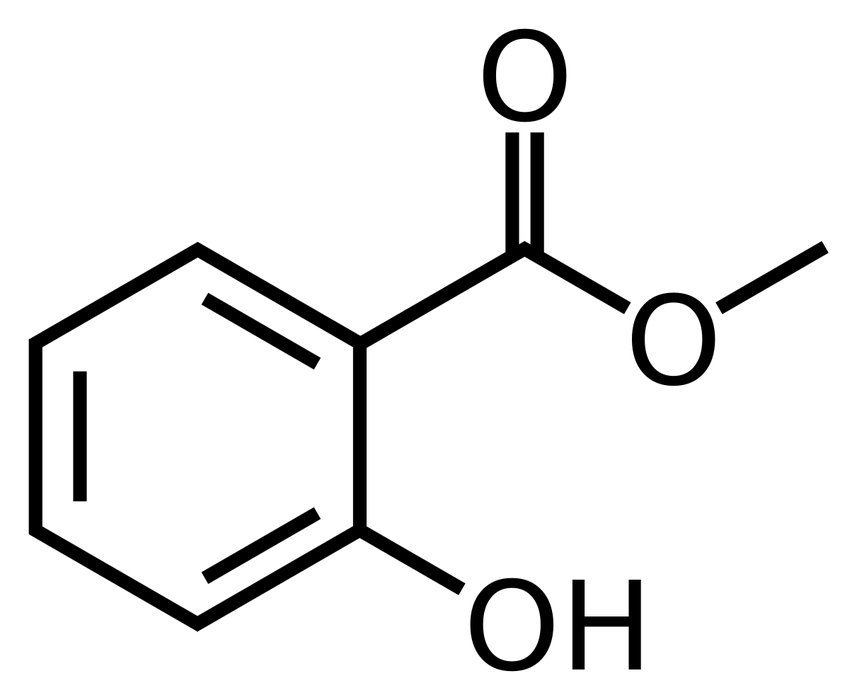
Skeletal structure of methyl salicylate.
Credit: Benrr101 / Wikimedia Commons

License: Public domain
Rendered from SVG to PNG, whitespace trimmed and placed on white
What it is
Methyl salicylate (CAS 119-36-8) is the chemical that gives oil of wintergreen its smell. [1,6] It belongs to the salicylate family, which includes aspirin. [1]
What it does and why it is used
It is used for its warming effect in creams for sore muscles and joints, and for scent and flavour in products such as mouthwash and vaporizer solutions. [1,2]
Regulatory status and health context
Canada
Health Canada's Cosmetic Ingredient Hotlist limits methyl salicylate to 1% in cosmetics. [4]
United States
US poison-prevention packaging rules require child-resistant packaging for liquid preparations containing more than 5% methyl salicylate by weight, except those in pressurized spray containers. [3]
European Union
FDA reports that a 2023 amendment to the EU's cosmetic fragrance allergen list added methyl salicylate. [5] The EU legal text itself was not reviewed for this article.
Environmental notes
The sources used for this review focus on poisoning and allergy and do not assess methyl salicylate's environmental effects, so we do not summarize them here.
Quick facts
- CAS: 119-36-8. [6]
- Where: muscle and joint rubs, oil of wintergreen, vaporizer solutions, mouthwash. [1]
- Main danger: salicylate poisoning if swallowed. [1,2]
- Most at risk: young children who swallow wintergreen oil or rubs. [2,3]
Sources
All URLs were fetched on 2026-11-14, except the Health Canada Hotlist, which did not respond to this review's requests; it was read from a copy fetched for earlier Chemical Century articles on 2026-11-08. Source publication dates differ from this draft's review date.
- MedlinePlus: Methyl salicylate overdose.
- Poison Control (National Capital Poison Center): Essential oils, poisonous when misused.
- eCFR: 16 CFR 1700.14, substances requiring special (child-resistant) packaging.
- Health Canada: Cosmetic Ingredient Hotlist, prohibited and restricted ingredients.
- US FDA: Allergens in cosmetics.
- PubChem PUG REST: methyl salicylate synonyms.