
Guaifenesin: the chest-cold expectorant that loosens mucus
CAS 93-14-1.Also known as glyceryl guaiacolate and expectorant.
Editorial draft Last reviewed 15 November 2026 About 627 words
CC INDEX
How it works42/100 Moderate
Guaifenesin itself usually causes only headache, nausea or vomiting, but cough and cold combinations can cause serious harm in young children. It is common in household cold remedies. Canada's under-6 labelling rule guides use, so the score sits in the moderate band.
An editorial summary of this article’s cited evidence. It isn’t medical advice or a personal risk estimate.
Age index
What is the age index?Which age groups are more affected by this chemical’s possible health issues, based on this article’s sources.
- Pregnancy Unborn babies Not well studied
- Infants 0 to 1 Higher concern
- Young children 1 to 5 Higher concern
- Children 6 to 12 Moderate
- Teens 13 to 19 Lower concern
- Adults 20 to 64 Lower concern
- Older adults 65 and over Lower concern
- Infants (higher concern): Cough and cold medicines should not be given under age 6 in Canada
- Young children (higher concern): Cough and cold medicines should not be given under age 6 in Canada
- Health Canada says non-prescription cough and cold medicines, including guaifenesin, should not be given to children under 6. MedlinePlus advises caution and careful dosing for children aged 4 to 11.

Illustration of a winter chest cold. Guaifenesin is an expectorant that thins mucus.
Credit: Chemical Century; AI-generated illustration
License: CC0 1.0
Illustration, not a photograph of a specific product. Resized and cropped for the web.
Guaifenesin is the mucus-loosening ingredient found in many chest-cold syrups and tablets. It thins the phlegm in the airways so a cough can clear it more easily, though it does not cure the cold itself. Side effects are usually limited to a headache or an upset stomach. The bigger concern is with combination cold products, which can double up ingredients and are not meant for young children.
Everyday exposure: where you meet it and how much
Guaifenesin is used to relieve chest congestion. [1] It comes as tablets, capsules, extended-release tablets, dissolving granules and a syrup, and alone or combined with antihistamines, cough suppressants and decongestants. [1] It may help control symptoms but does not treat the cause or speed recovery. [1]
Known and suspected harms
Evidence labels are editorial summaries, not individual risk predictions: established means recognized under the stated conditions; probable means a likely contribution with uncertainty; possible means limited evidence; disputed means assessors disagree. These labels do not describe how common an effect is.
- Established — common side effects: headache, nausea and vomiting. [1]
- Established — risk to young children: non-prescription cough and cold combination products, including those with guaifenesin, can cause serious side effects or death in young children. [1] Health Canada lists guaifenesin among ingredients that should not be used in children under 6. [2]
- Established — doubling up: two cough and cold products may contain the same active ingredient, and taking both could cause an overdose. [1]
- Possible — some health conditions: smokers and people with asthma, emphysema, chronic bronchitis or a cough with a lot of phlegm should tell their doctor first. [1]
Reducing avoidable exposure and harm
Check cough and cold labels carefully before using two products at once. [1] Do not give these medicines to children under 6. [2] Use the measuring cup or spoon that comes with liquids, drink plenty of fluids, and call a doctor if symptoms do not improve within 7 days or come with a high fever, rash or lasting headache. [1]
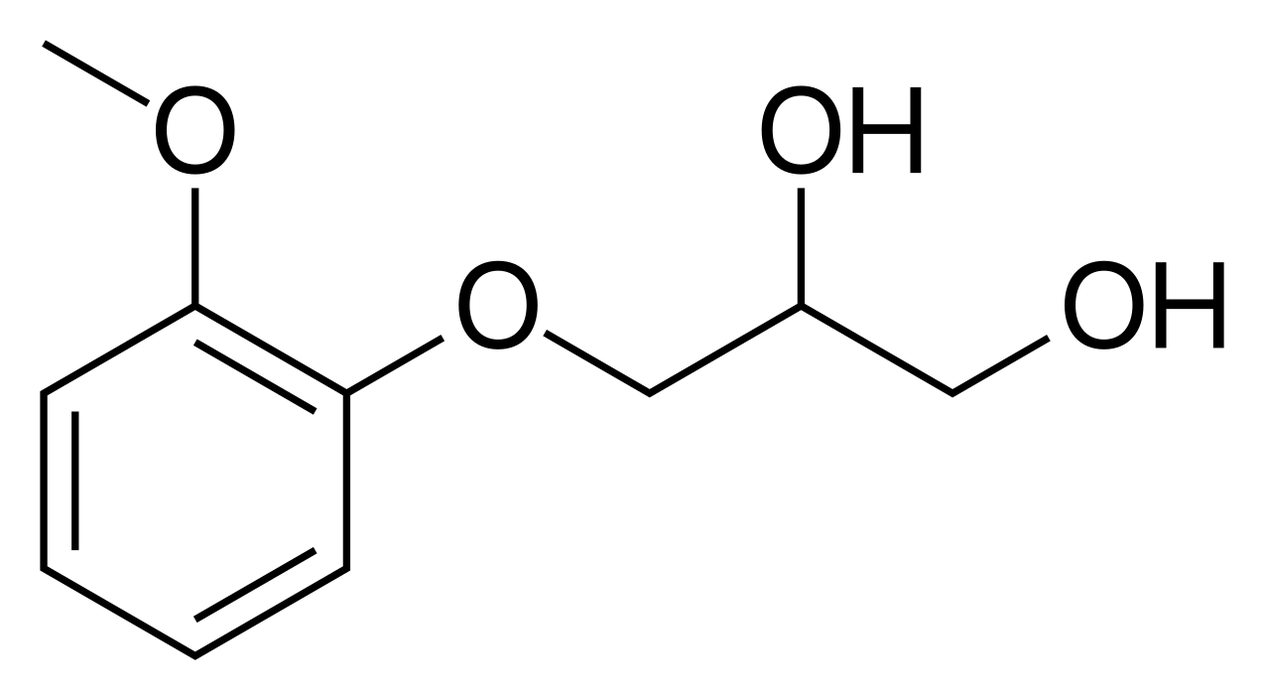
Structural formula of guaifenesin.
Credit: Fvasconcellos / Wikimedia Commons

License: Public domain
Rendered from SVG to PNG, whitespace trimmed and placed on white
What it is
Guaifenesin (CAS 93-14-1), also called glyceryl guaiacolate, is an expectorant. [1,2,3]
What it does and why it is used
It thins the mucus in the air passages, making it easier to cough up and clear the airways. [1]
Regulatory status and health context
Canada
In 2009 Health Canada had manufacturers relabel non-prescription cough and cold medicines containing guaifenesin and certain other ingredients as not for use in children under 6, citing limited evidence of benefit and reports of misuse, overdose and rare serious side effects. [2]
United States
MedlinePlus advises not giving non-prescription cough and cold products with guaifenesin to children younger than 4, and using caution for ages 4 to 11. [1]
European Union
The EU law website was not fully available when this article was reviewed, so EU legal status was not checked and is not summarized here.
Environmental notes
The sources used for this review do not assess guaifenesin's environmental effects, so we do not summarize them here. MedlinePlus advises using a medicine take-back program rather than flushing unneeded medicine. [1]
Quick facts
- CAS: 93-14-1. [3]
- Where: chest-cold syrups and tablets. [1]
- Main concern: harm to young children from combination products. [1,2]
- Most at risk: children under 6. [2]
Sources
All URLs were fetched on 2026-11-15; the Health Canada page was read with a separate web-reading tool because it did not respond to this review's direct requests. The EU law website was not fully available that day, so EU legislation could not be checked. Source publication dates differ from this draft's review date.