
Fragrance and flavourMedicines and health
Eugenol: the clove-oil compound in toothache remedies that is dangerous if swallowed in quantity
CAS 97-53-0.Also known as clove oil (main component) and 4-allyl-2-methoxyphenol.
Editorial draft Last reviewed 14 November 2026 About 768 words
CC INDEX
How it works57/100 Moderate
Swallowing large amounts of clove oil causes well-described serious harm, including seizures and liver failure, especially in children. Everyday exposure from food flavouring, toothpaste and fragranced products is common but small. Regulators treat eugenol mainly as a fragrance allergen to be named on labels, so the score sits in the moderate band.
An editorial summary of this article’s cited evidence. It isn’t medical advice or a personal risk estimate.
Age index
What is the age index?Which age groups are more affected by this chemical’s possible health issues, based on this article’s sources.
- Pregnancy Unborn babies Not well studied
- Infants 0 to 1 Not well studied
- Young children 1 to 5 Higher concern
- Children 6 to 12 Higher concern
- Teens 13 to 19 Moderate
- Adults 20 to 64 Moderate
- Older adults 65 and over Moderate
- Young children (higher concern): Smaller amounts can be serious; liver failure especially in children
- Children (higher concern): Liver failure from overdose especially in children

Illustration of cloves and clove oil. Eugenol is the main aroma compound of clove oil.
Credit: Chemical Century; AI-generated illustration
License: CC0 1.0
Illustration, not a photograph of a specific product. Resized and cropped for the web.
Eugenol is the warm, spicy scent of cloves, and it is the reason clove oil turns up in some toothache remedies. It flavours foods and toothpaste and scents lotions and perfumes, usually in small amounts. Swallowing a large amount of clove oil is another story: it can cause seizures, breathing problems and liver failure, and children are especially vulnerable. For some people, eugenol in a cream or perfume can also trigger an itchy skin rash, which is why it is one of the fragrance ingredients regulators single out on labels.
Everyday exposure: where you meet it and how much
Eugenol oil, or clove oil, is found in some toothache medicines, toothpaste, food flavourings, clove cigarettes, lotions, creams and oils, and electronic cigarette refills. [1] US rules allow clove and its derivatives, including eugenol, as food flavourings at levels consistent with good manufacturing practice. [3] Eugenol is also one of the fragrance ingredients identified as common allergens in cosmetics. [2,4]
Most people meet eugenol in small amounts, as a flavour or scent. Overdose happens when someone swallows a large amount of a product containing the oil, by accident or on purpose. [1]
Known and suspected harms
Evidence labels are editorial summaries, not individual risk predictions: established means recognized under the stated conditions; probable means a likely contribution with uncertainty; possible means limited evidence; disputed means assessors disagree. These labels do not describe how common an effect is.
- Established — serious poisoning if swallowed in quantity: as little as 10 millilitres of eugenol in adults, or smaller amounts in children, can have serious effects. [1] The main symptoms are nervous system problems, breathing problems and liver failure, especially in children; others include burns in the mouth and throat, abdominal pain, vomiting, rapid heartbeat, blood in the urine, dizziness, seizures and coma. [1] Survival past 48 hours is usually a good sign, but permanent injury is possible. [1]
- Established — allergic skin reactions: eugenol is on the list of 26 fragrance ingredients that the European Commission identified as allergens, and FDA explains that allergic reactions to cosmetics most often appear as itchy, red rashes (allergic contact dermatitis). [2]
Reducing avoidable exposure and harm
Keep clove oil and toothache products closed and out of children's reach, and use them only as directed. [1] If someone swallows a large amount, seek emergency help right away and do not make them throw up unless told to; wash any product off the skin with soap and water. [1] People who get rashes from fragranced products can ask a health professional about patch testing, which can identify the specific allergen so it can be avoided. [2]
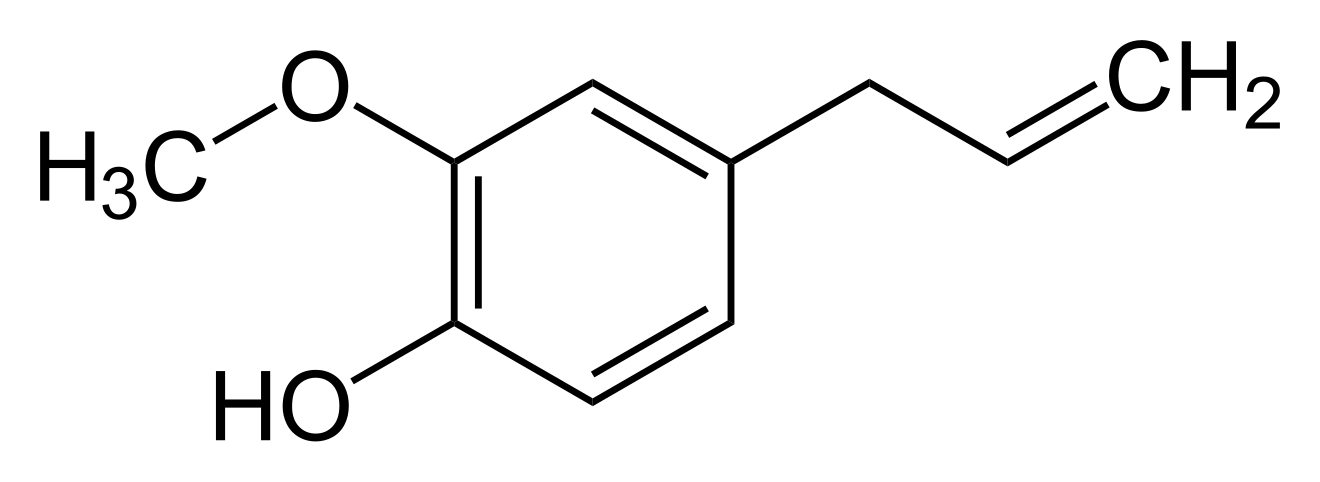
Skeletal structure of eugenol.
Credit: NEUROtiker / Wikimedia Commons

License: Public domain
Rendered from SVG to PNG, whitespace trimmed and placed on white
What it is
Eugenol (CAS 97-53-0) is the main aroma compound of clove oil, with a spicy, clove-like scent. [1,3,5]
What it does and why it is used
It is used for flavour in foods and toothpaste, for scent in lotions, creams and perfumes, and in some toothache remedies. [1,3]
Regulatory status and health context
Canada
The sources used for this review do not cover eugenol's status in Canada, so we do not summarize it here.
United States
FDA lists clove and its derivatives, including eugenol, as generally recognized as safe for use as flavouring agents in food at levels not exceeding good manufacturing practice. [3] FDA's cosmetics allergen page notes that fragrance ingredients such as eugenol may not be identified individually on US cosmetic labels. [2]
European Union
The EU cosmetics regulation requires eugenol to be named in the ingredient list when it exceeds 0.001% in leave-on products or 0.01% in rinse-off products. [4]
Environmental notes
The sources used for this review do not assess eugenol's environmental effects, so we do not summarize them here.
Quick facts
- CAS: 97-53-0. [5]
- Where: clove oil, toothache remedies, toothpaste, flavourings, fragranced lotions and perfumes. [1,3]
- Main danger: seizures, breathing problems and liver failure if a large amount is swallowed. [1]
- Most at risk: children; people allergic to fragrance ingredients. [1,2]
Sources
All URLs were fetched on 2026-11-14, except the EU cosmetics regulation, which did not respond to this review's requests; it was read from a copy fetched for earlier Chemical Century articles in November 2026. The EU text is the regulation as originally published, and later amendments were not checked. Source publication dates differ from this draft's review date.