
Water, air and residuesNutrients and supplements
Copper: the essential metal in pipes and supplements, and when water has too much
CAS 7440-50-8.Also known as copper metal and copper in drinking water.
Editorial draft Last reviewed 15 November 2026 About 666 words
CC INDEX
How it works44/100 Moderate
Too much copper can cause stomach upset in the short term and liver and kidney effects over time, though sudden poisoning is rare. Exposure can come from plumbing, supplements and other products. Canada and the US set drinking-water limits, so the score sits in the moderate band.
An editorial summary of this article’s cited evidence. It isn’t medical advice or a personal risk estimate.
Age index
What is the age index?Which age groups are more affected by this chemical’s possible health issues, based on this article’s sources.
- Pregnancy Unborn babies Lower concern
- Infants 0 to 1 Lower concern
- Young children 1 to 5 Lower concern
- Children 6 to 12 Lower concern
- Teens 13 to 19 Lower concern
- Adults 20 to 64 Lower concern
- Older adults 65 and over Lower concern
- The sources used for this review do not single out an age group; the US EPA says people with Wilson's disease should consult their doctor if copper in their water exceeds the action level.

Illustration of copper plumbing. Copper can leach into drinking water from household pipes.
Credit: Chemical Century; AI-generated illustration
License: CC0 1.0
Illustration, not a photograph of a specific product. Resized and cropped for the web.
Copper is an essential nutrient that is also found in water pipes, coins, wire, some pesticides and supplements. Sudden copper poisoning is rare, but copper can leach into drinking water from household plumbing, and too much in water can cause stomach upset. Over the long term, high exposure may affect the liver and kidneys. Canada and the US both set limits for copper in drinking water.
Everyday exposure: where you meet it and how much
Copper is found in some coins, certain insecticides and fungicides, copper wire, some aquarium products, and vitamin and mineral supplements. [1] Health Canada lists natural occurrence and leaching from copper piping as sources in drinking water, and the US EPA lists corrosion of household plumbing and erosion of natural deposits. [2,3]
Known and suspected harms
Evidence labels are editorial summaries, not individual risk predictions: established means recognized under the stated conditions; probable means a likely contribution with uncertainty; possible means limited evidence; disputed means assessors disagree. These labels do not describe how common an effect is.
- Established — short-term stomach effects: swallowing large amounts can cause abdominal pain, diarrhea and vomiting, and both Health Canada and the US EPA cite gastrointestinal effects from short-term exposure in drinking water. [1,2,3]
- Established — liver and kidneys: long-term exposure above drinking-water limits is linked to liver or kidney damage, and severe poisoning can cause liver failure and death. [1,2,3]
- Established — breathing dust and fumes: copper dust and fumes may cause metal fume fever, with chest pain, chills, cough, fever and a metallic taste, and long-term exposure may cause lung inflammation and scarring. [1]
- Established — rarity: sudden copper poisoning is rare, but serious health problems from long-term exposure can occur. [1]
Reducing avoidable exposure and harm
Take drinking-water samples at the tap when testing for copper, since Health Canada's guideline is for total copper at the tap. [2] People with Wilson's disease should consult their doctor if copper in their water exceeds the US action level. [3] If someone swallows a large amount, get medical help right away and do not make them throw up unless poison control or a health care provider says to. [1]
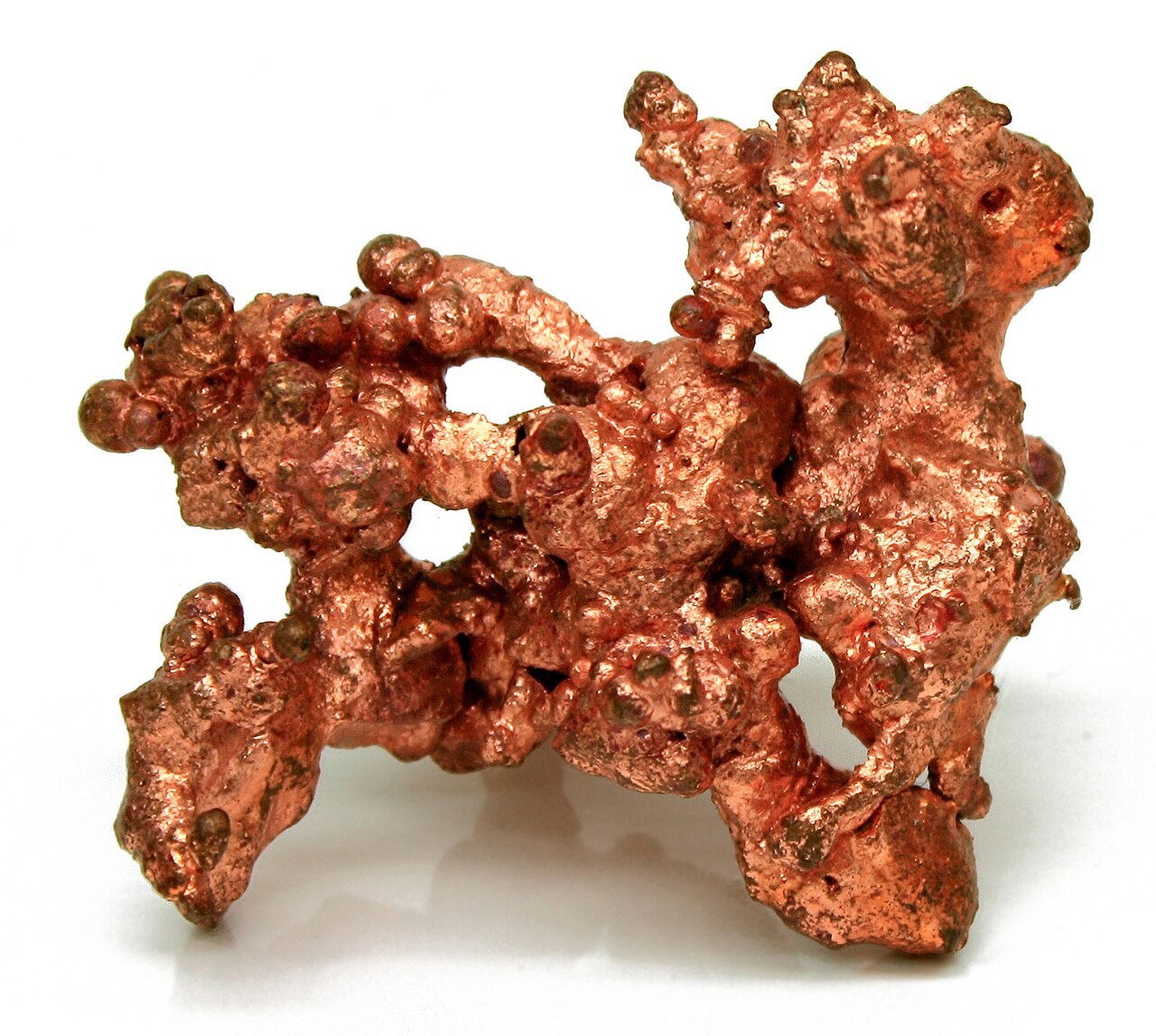
A piece of native copper.
Credit: Jonathan Zander (Digon3) / Wikimedia Commons

License: CC BY-SA 3.0
Resized for the web; no content edits
What it is
Copper (CAS 7440-50-8) is a metal and an essential micronutrient. [1,5]
What it does and why it is used
The body needs small amounts of copper, and it is used in pipes, wire, coins and pesticides. [1,2]
Regulatory status and health context
Canada
Health Canada's drinking-water guideline sets a maximum acceptable concentration of 2 mg/L for copper and an aesthetic objective of 1 mg/L based on taste and staining of laundry and plumbing fixtures. [2]
United States
The US EPA regulates copper in drinking water with a treatment technique and an action level of 1.3 mg/L. [3]
European Union
The EU law website was not fully available when this article was reviewed, so EU legal status was not checked and is not summarized here.
Environmental notes
In the notifications compiled by PubChem, 43.1% of reports classify copper as very toxic to aquatic life. [4] Percentages are shares of company reports to the European Chemicals Agency's classification inventory, as compiled by PubChem.
Quick facts
- CAS: 7440-50-8. [5]
- Where: plumbing, coins, wire, pesticides, supplements. [1]
- Main concern: stomach upset; liver and kidney effects from long-term excess. [2,3]
- Most at risk: people with Wilson's disease. [3]
Sources
All URLs were fetched on 2026-11-15; Health Canada pages were read with a separate web-reading tool because they did not respond to this review's direct requests. The EU law website was not fully available that day, so EU legislation could not be checked for this review. Source publication dates differ from this draft's review date.