
Household materialsNutrients and supplements
Cobalt: the vitamin B12 metal in batteries, pigments and some hip implants
CAS 7440-48-4.Also known as cobalt metal and Co.
Editorial draft Last reviewed 15 November 2026 About 665 words
CC INDEX
How it works34/100 Mild
Long-term cobalt poisoning can damage the heart, lungs, hearing, nerves and thyroid, and these effects are rarely reversible. Most exposure is industrial or from some metal-on-metal hip implants, and a single large swallow is rare and likely not very dangerous, so the score sits in the mild band.
An editorial summary of this article’s cited evidence. It isn’t medical advice or a personal risk estimate.
Age index
What is the age index?Which age groups are more affected by this chemical’s possible health issues, based on this article’s sources.
- Pregnancy Unborn babies Lower concern
- Infants 0 to 1 Lower concern
- Young children 1 to 5 Lower concern
- Children 6 to 12 Lower concern
- Teens 13 to 19 Lower concern
- Adults 20 to 64 Lower concern
- Older adults 65 and over Moderate
- The sources used for this review do not give age-specific advice. Older adults are rated moderate only because metal-on-metal hip implants are a described exposure route.

Illustration of cobalt blue glass and ceramics. Cobalt is used in dyes and pigments such as cobalt blue.
Credit: Chemical Century; AI-generated illustration
License: CC0 1.0
Illustration, not a photograph of a specific product. Resized and cropped for the web.
Cobalt is a natural metal that the body needs in tiny amounts as part of vitamin B12. It is also found in batteries, magnets, tools, cobalt blue pigments and some metal-on-metal hip implants. Most people are unlikely to be harmed, since problems usually need high exposure over weeks to months. Long-term exposure, such as breathing cobalt dust at work or wear from some hip implants, can affect the heart, lungs, hearing and thyroid.
Everyday exposure: where you meet it and how much
Cobalt is a natural element in the earth's crust and a component of vitamin B12, which supports the production of red blood cells; vitamin B12 is not associated with cobalt poisoning. [1] Cobalt is also found in alloys, batteries, chemistry and crystal sets, drill bits, saw blades and other machine tools, dyes and pigments (cobalt blue), magnets, some metal-on-metal hip implants and tires. [1] It was once used as a stabilizer in beer foam, which caused a heart muscle weakness called beer-drinker's heart. [1]
Known and suspected harms
Evidence labels are editorial summaries, not individual risk predictions: established means recognized under the stated conditions; probable means a likely contribution with uncertainty; possible means limited evidence; disputed means assessors disagree. These labels do not describe how common an effect is.
- Established — breathing in dust: the most worrisome form, usually in industrial settings with drilling or polishing; long-term breathing of cobalt dust can cause breathing problems similar to asthma or pulmonary fibrosis. [1]
- Established — long-term absorption: absorbing large amounts over time can cause cardiomyopathy, deafness, nerve problems, ringing in the ears, thickened blood, thyroid problems and vision problems. [1]
- Established — hip implants: wear of some cobalt/chromium metal-on-metal hip implants can release metal particles into the hip socket and sometimes the bloodstream, causing cobalt toxicity. [1]
- Established — skin: prolonged contact will likely cause irritation and rashes that go away slowly. [1]
- Established — single swallow: swallowing a large amount of absorbable cobalt at once is very rare and likely not very dangerous, though it may cause nausea and vomiting. [1]
Reducing avoidable exposure and harm
If you have been exposed to cobalt, leave the area and get fresh air, and wash skin that came in contact with it thoroughly. [1] People exposed to a large amount on a single occasion usually recover without long-term complications, but problems from long-term poisoning are rarely reversible. [1]
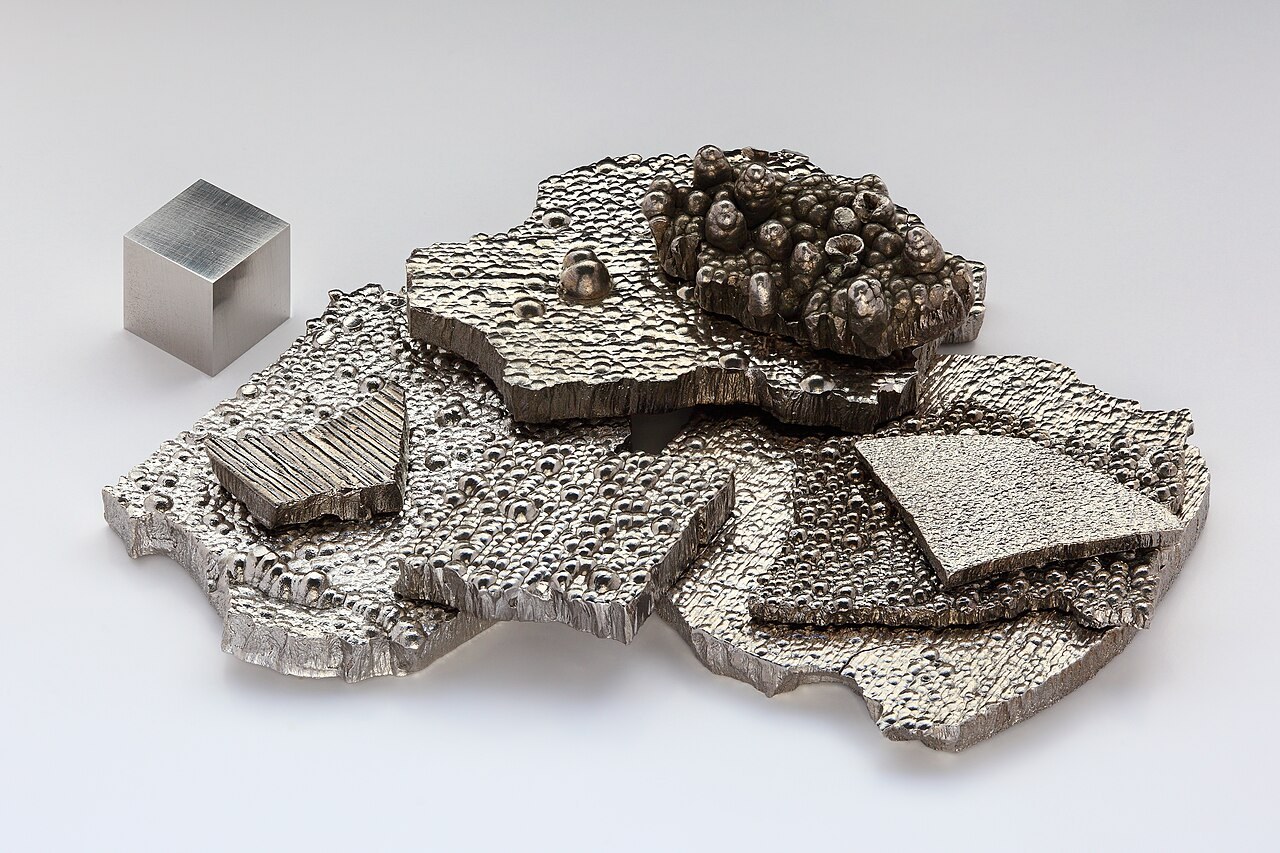
Electrolytic cobalt and a 1 cm cube of cobalt metal.
Credit: Alchemist-hp / Wikimedia Commons

License: FAL
Resized for the web; no content edits
What it is
Cobalt (CAS 7440-48-4) is a naturally occurring element; very small amounts are needed for animals and humans to stay healthy. [1,2]
What it does and why it is used
Large exposures over weeks to months can lead to poisoning by swallowing, breathing it in or prolonged skin contact. [1]
Regulatory status and health context
Canada
The sources used for this review do not summarize Canadian rules for cobalt, so we do not describe them here.
United States
The sources used for this review do not summarize US consumer rules for cobalt, so we do not describe them here.
European Union
The EU law website was not fully available when this article was reviewed, so EU legal status was not checked and is not summarized here.
Environmental notes
The sources used for this review do not assess cobalt's environmental effects, so we do not summarize them here.
Quick facts
- CAS: 7440-48-4. [2]
- Where: vitamin B12; batteries, magnets, tools, pigments, some hip implants. [1]
- Main concern: long-term exposure affecting heart, lungs, hearing and thyroid. [1]
- Single swallow: rare and likely not very dangerous. [1]
Sources
All URLs were fetched on 2026-11-15. The EU law website was not fully available that day, so EU legislation could not be checked for this review. Source publication dates differ from this draft's review date. A hazard-classification record for cobalt was not used because the PubChem record retrieved did not give clear percentages.