
Cleaning and laundryWater, air and residues
Chlorine gas: why bleach should never be mixed with other cleaners
CAS 7782-50-5.Also known as chlorine, Cl2, and chloramine gas.
Editorial draft Last reviewed 15 November 2026 About 679 words
CC INDEX
How it works66/100 High
Breathing chlorine or chloramine gas can rapidly injure the airways and lungs, and accidental mixing of cleaners is a common route. Chlorine-based products are found in many homes and pools. Labelling and safe-use advice are the main protections, so the score sits in the high band.
An editorial summary of this article’s cited evidence. It isn’t medical advice or a personal risk estimate.
Age index
What is the age index?Which age groups are more affected by this chemical’s possible health issues, based on this article’s sources.
- Pregnancy Unborn babies Not well studied
- Infants 0 to 1 Moderate
- Young children 1 to 5 Higher concern
- Children 6 to 12 Moderate
- Teens 13 to 19 Moderate
- Adults 20 to 64 Moderate
- Older adults 65 and over Moderate
- Young children (higher concern): Bleach and pool products within reach can be swallowed
- ATSDR says children are likely to have similar effects to adults and may be more sensitive. It advises storing household chemicals in original containers out of reach of young children.

Illustration of cleaning products stored apart in a ventilated room near a pool. Never mix bleach with other cleaners.
Credit: Chemical Century; AI-generated illustration
License: CC0 1.0
Illustration, not a photograph of a specific product. Resized and cropped for the web.
Chlorine keeps pools and tap water free of germs, and it is part of the chemistry of household bleach. Trouble can start when bleach is mixed with other cleaners: acids can release chlorine gas, and ammonia can release chloramine gases. Breathing these fumes can quickly burn the eyes, nose and lungs. Using one product at a time, airing out the room and storing pool chemicals carefully are simple ways to stay safe.
Everyday exposure: where you meet it and how much
Chlorine is present in some bleach products, mild cleaners, and swimming pool water and pool tablets. [1] Gas can be released when bleach is mixed with acidic cleaners such as some toilet cleaners, when bleach is mixed with ammonia (forming chloramine gases), and when a partly filled container of chlorine tablets is opened after sitting for months, such as at the start of pool season. [1,2]
Chlorine gas is not present in chlorinated tap water; it is quickly converted to other chemicals, such as hypochlorous acid and hypochlorite, which do the disinfecting. [2]
Known and suspected harms
Evidence labels are editorial summaries, not individual risk predictions: established means recognized under the stated conditions; probable means a likely contribution with uncertainty; possible means limited evidence; disputed means assessors disagree. These labels do not describe how common an effect is.
- Established — airway and lung injury: breathing chlorine can cause breathing difficulty, throat swelling and fluid in the lungs. [1] ATSDR reports nose irritation at 1 to 3 ppm, throat irritation at 5 to 15 ppm, and lung injury at 40 to 60 ppm. [2]
- Established — eyes and skin: exposure can cause severe pain or burning in the eyes, nose, ears, lips or tongue, loss of vision, and skin burns. [1]
- Established — swallowing: drinking concentrated hypochlorite solution can severely damage the upper digestive tract and can be fatal; small amounts can irritate the oesophagus. [2]
- Established — long-term outcome: burns in the airway or digestive tract can lead to tissue death and scarring that causes lasting breathing, swallowing and digestion problems. [1]
Reducing avoidable exposure and harm
Do not mix bleach with other household cleaners, especially acidic cleaners or ammonia. [2] Store household chemicals in their original labelled containers, out of reach of young children, and never in drink bottles. [2] Follow instructions for pool disinfection products. [2] If someone breathes in the gas, move them to fresh air right away and seek medical help. [1]
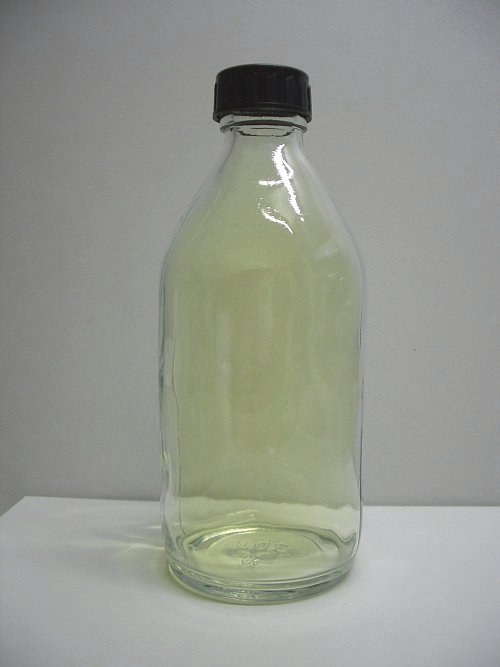
Chlorine gas in a sealed bottle.
Credit: W. Oelen / Wikimedia Commons

License: CC BY-SA 3.0
Resized for the web; no content edits
What it is
Chlorine (CAS 7782-50-5) is an important industrial chemical used to make thousands of products. [2,4] In water it reacts to form hydrochloric acid and hypochlorous acid. [1]
What it does and why it is used
It prevents bacteria from growing, which is why chlorine and chlorine-based chemicals are used to disinfect water and pools. [1,2]
Regulatory status and health context
Canada
This review did not check Canadian rules specific to chlorine, so they are not summarized here.
United States
EPA sets a maximum residual disinfectant level of 4.0 mg/L for chlorine in public drinking water. [3]
European Union
The EU law website was not fully available when this article was reviewed, so EU legal status was not checked and is not summarized here.
Environmental notes
The sources used for this review focus on health effects and do not assess chlorine's environmental effects, so we do not summarize them here.
Quick facts
- CAS: 7782-50-5. [4]
- Where: bleach, some cleaners, pool water and pool tablets. [1]
- Main danger: toxic gas when bleach is mixed with acids or ammonia. [1,2]
- Most at risk: people cleaning in closed spaces and young children near stored products. [2]
Sources
All URLs were fetched on 2026-11-15. The EU law website was not fully available that day, so EU legislation could not be checked for this review. Source publication dates differ from this draft's review date.