
Cetirizine: the allergy and hives tablet that can make some people drowsy
CAS 83881-51-0.Also known as cetirizine hydrochloride and cetirizine dihydrochloride.
Editorial draft Last reviewed 15 November 2026 About 589 words
CC INDEX
How it works42/100 Moderate
Cetirizine commonly causes drowsiness, tiredness and dry mouth, and long-term users can get severe itching after stopping. It is a common non-prescription allergy and hives medicine, so many people take it. Package directions guide its use, so the score sits in the moderate band.
An editorial summary of this article’s cited evidence. It isn’t medical advice or a personal risk estimate.
Age index
What is the age index?Which age groups are more affected by this chemical’s possible health issues, based on this article’s sources.
- Pregnancy Unborn babies Not well studied
- Infants 0 to 1 Not well studied
- Young children 1 to 5 Not well studied
- Children 6 to 12 Lower concern
- Teens 13 to 19 Lower concern
- Adults 20 to 64 Lower concern
- Older adults 65 and over Moderate
- MedlinePlus advises telling a doctor about pregnancy, breastfeeding, or kidney or liver disease before use. The sources used for this review do not give age-specific advice for babies and young children, so follow the package label or ask a pharmacist.

Illustration of a living room. Cetirizine is an antihistamine used for allergy symptoms and hives.
Credit: Chemical Century; AI-generated illustration
License: CC0 1.0
Illustration, not a photograph of a specific product. Resized and cropped for the web.
Cetirizine is a widely used antihistamine that calms sneezing, itchy eyes and itchy hives. It is usually taken once a day, with or without food. Some people feel drowsy or tired on it, and alcohol can make that worse. People who take it every day for months may want to know that stopping can sometimes bring on a short spell of intense itching.
Everyday exposure: where you meet it and how much
Cetirizine is used to treat allergy symptoms such as sneezing, a runny nose, itching of the nose or throat, and red, itchy or watery eyes, and to treat hives. [1] It comes as tablets, chewable tablets, capsules, quickly dissolving tablets and a syrup, taken once a day with or without food. [1] It is also sold in combination with pseudoephedrine. [1]
Known and suspected harms
Evidence labels are editorial summaries, not individual risk predictions: established means recognized under the stated conditions; probable means a likely contribution with uncertainty; possible means limited evidence; disputed means assessors disagree. These labels do not describe how common an effect is.
- Established — drowsiness: cetirizine may make you drowsy, so do not drive or operate machinery until you know how it affects you; alcohol adds to the drowsiness. [1]
- Established — other common side effects: excessive tiredness and dry mouth. [1]
- Established — itching after stopping: severe itching can develop within a few days of stopping cetirizine after taking it regularly for months or years. [1]
- Established — serious reactions: rash or difficulty breathing or swallowing call for a doctor right away; overdose can cause restlessness, irritability and drowsiness. [1]
Reducing avoidable exposure and harm
Take cetirizine exactly as directed and avoid alcohol while taking it. [1] Do not use it in place of an epinephrine injector if a doctor has prescribed one for severe allergic reactions. [1] Stop and call a doctor if hives do not improve in the first 3 days or last longer than 6 weeks. [1]
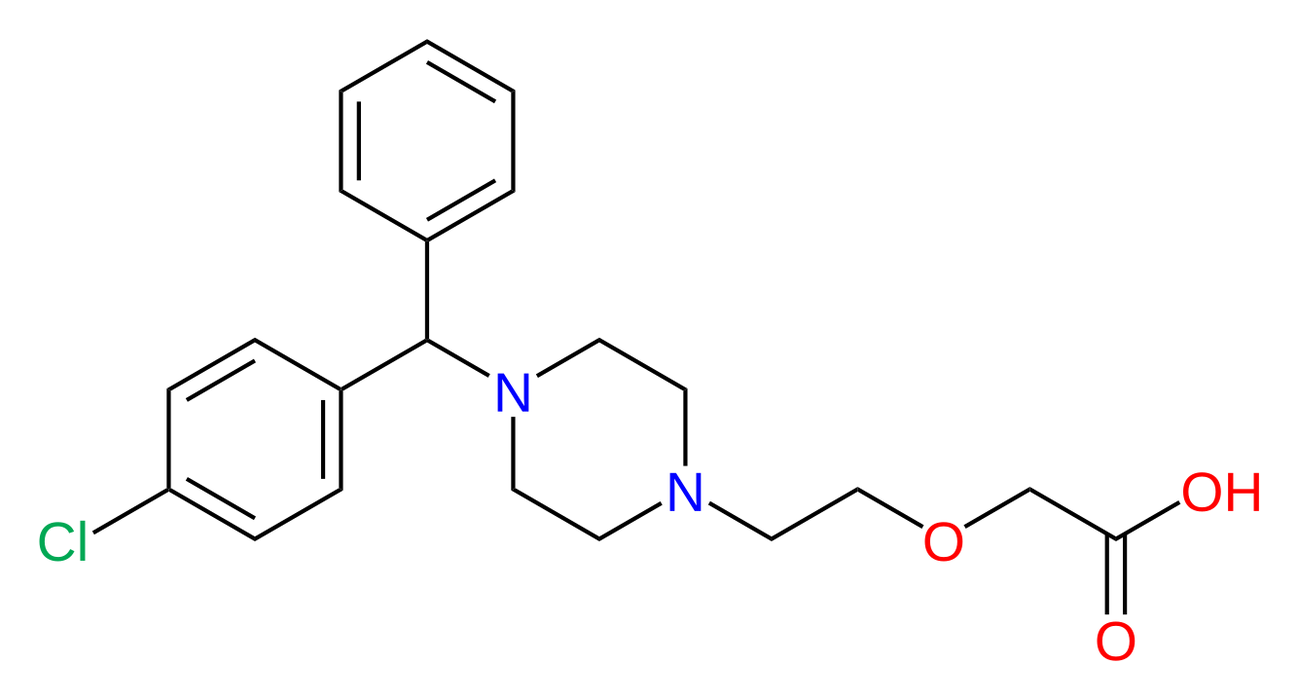
Structural formula of cetirizine.
Credit: Exe csrss / Wikimedia Commons

License: CC BY-SA 4.0
Rendered from SVG to PNG, whitespace trimmed and placed on white
What it is
Cetirizine (CAS 83881-51-0) is an antihistamine; it is also sold as cetirizine hydrochloride (CAS 83881-52-1). [1,2,3]
What it does and why it is used
It blocks the action of histamine, a substance in the body that causes allergic symptoms. [1]
Regulatory status and health context
Canada
The sources used for this review do not summarize Canadian rules for cetirizine, so we do not describe them here.
United States
MedlinePlus says hives that are bruised, blistered, unusually coloured or not itchy should not be treated with cetirizine without a doctor's advice. [1]
European Union
The EU law website was not fully available when this article was reviewed, so EU legal status was not checked and is not summarized here.
Environmental notes
The sources used for this review do not assess cetirizine's environmental effects, so we do not summarize them here. MedlinePlus advises using a medicine take-back program rather than flushing unneeded medicine. [1]
Quick facts
- CAS: 83881-51-0. [2]
- Where: allergy and hives tablets, capsules and syrups. [1]
- Main concern: drowsiness; itching after long-term use stops. [1]
- Most at risk: drivers and people who drink alcohol while taking it. [1]
Sources
All URLs were fetched on 2026-11-15. The EU law website was not fully available that day, so EU legislation could not be checked for this review. Source publication dates differ from this draft's review date.