
Food and drinkWater, air and residuesHousehold materials
Cadmium: the metal in batteries, some jewellery and food
CAS 7440-43-9.Also known as Cd and cadmium compounds.
Editorial draft Last reviewed 15 November 2026 About 776 words
CC INDEX
How it works66/100 High
WHO classifies cadmium as a human carcinogen with toxic effects on the kidneys, bones and lungs. Most people get small amounts from food, smokers get more, and children may meet it in toys and jewellery. Limits apply to children's jewellery and toys, so the score sits in the high band.
An editorial summary of this article’s cited evidence. It isn’t medical advice or a personal risk estimate.
Age index
What is the age index?Which age groups are more affected by this chemical’s possible health issues, based on this article’s sources.
- Pregnancy Unborn babies Not well studied
- Infants 0 to 1 Moderate
- Young children 1 to 5 Higher concern
- Children 6 to 12 Higher concern
- Teens 13 to 19 Moderate
- Adults 20 to 64 Moderate
- Older adults 65 and over Moderate
- Young children (higher concern): Cadmium in toys and jewellery is a particular concern for children
- Children (higher concern): Cadmium in toys and jewellery is a particular concern for children
- WHO lists toys, jewellery and plastics containing cadmium, and electronic waste recycling, as exposures of particular concern for children. FDA considers very young children a vulnerable group when assessing cadmium in food.

Illustration of everyday foods, small batteries and inexpensive jewellery. Cadmium occurs in small amounts in food and has been used in batteries and some jewellery.
Credit: Chemical Century; AI-generated illustration
License: CC0 1.0
Illustration, not a photograph of a specific product. Resized and cropped for the web.
Cadmium is a soft, silvery metal found in tiny amounts in soil, water and food, and it has been used in rechargeable batteries, pigments and coatings. For most non-smokers, food is the main source, while for smokers, tobacco smoke is the biggest one. Over time, cadmium can harm the kidneys and bones, and workplace exposure is linked to lung cancer. Eating a varied diet, avoiding tobacco smoke and keeping cheap metal jewellery away from young children are sensible steps.
Everyday exposure: where you meet it and how much
Cadmium is found in tiny amounts in air, water, soil and food. [1] The general population is exposed mainly by eating cadmium-contaminated foods, which is the main source for nonsmokers, and by breathing tobacco smoke; for smokers, smoking is the main source. [1,2] It builds up readily in some organisms, notably shellfish such as mollusks and crustaceans, with lower levels in vegetables, cereals and starchy roots. [3]
Levels in food depend on where it is grown; cadmium is higher where some phosphate fertilizers are used and near smelting, mining and fossil-fuel burning. [2] Pottery with cadmium-based pigments may leach cadmium into food. [2] The highest exposures are in workplaces where cadmium products are made. [1]
Known and suspected harms
Evidence labels are editorial summaries, not individual risk predictions: established means recognized under the stated conditions; probable means a likely contribution with uncertainty; possible means limited evidence; disputed means assessors disagree. These labels do not describe how common an effect is.
- Established — kidneys, bones and lungs: WHO says cadmium has toxic effects on the kidneys and on the skeletal and respiratory systems. [3]
- Established — cancer: WHO classifies cadmium as a human carcinogen, and workplace exposure to cadmium compounds is linked to a higher risk of lung cancer. [1,3]
- Established — children's products: WHO lists toys, jewellery and plastics containing cadmium as exposures of particular concern for children. [3]
Reducing avoidable exposure and harm
Avoid tobacco smoke. [1] Eat a variety of nutrient-dense foods, which FDA says is good for nutrition and can limit exposure to a contaminant from any one food. [2] Dispose of nickel-cadmium batteries properly, and do not let children play with them. [1] If you work with cadmium, avoid carrying dust home on clothing, skin, hair or tools. [1]
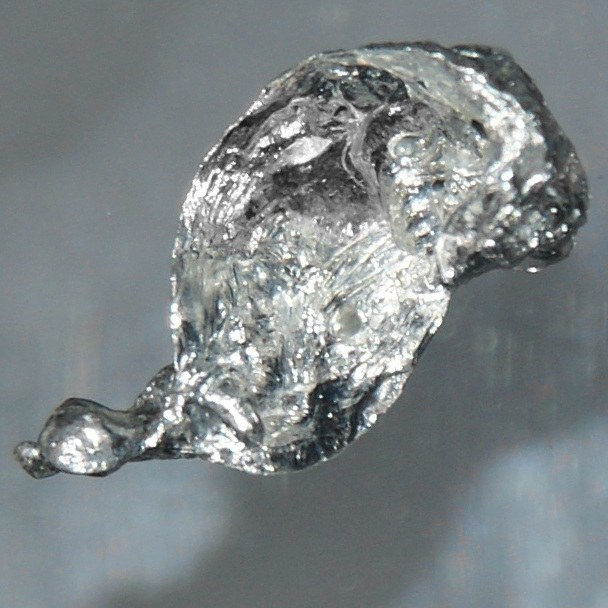
Cadmium metal.
Credit: Hi-Res Images of Chemical Elements / Wikimedia Commons

License: CC BY 3.0
Resized for the web; no content edits
What it is
Cadmium (CAS 7440-43-9) is a natural element found in the Earth's crust. [1,7] Most cadmium used in the US is extracted during the production of other metals such as zinc, lead and copper. [1]
What it does and why it is used
It does not corrode easily and has been used in batteries, pigments, metal coatings and plastics; current uses include nickel-cadmium rechargeable batteries, electroplating, solar cells and pigments. [1,2]
Regulatory status and health context
Canada
Canada's Children's Jewellery Regulations say small children's jewellery items must not contain more than 130 mg/kg of cadmium. [4] Under the Toys Regulations, stickers, films and surface coatings on accessible parts of a toy must not release more than 1,000 mg/kg of any compound of cadmium and certain other elements. [5]
United States
FDA monitors and regulates cadmium in foods and may take regulatory action if a level makes a food unsafe. [2]
European Union
Cadmium and its compounds are on the EU cosmetics regulation's list of prohibited substances (Annex II), as originally published. [6] Other EU rules on cadmium, such as food limits, could not be checked for this review because the EU law website was not fully available.
Environmental notes
Human activity has greatly increased cadmium levels in the environment, and it can travel long distances through the air from where it is released. [3] It builds up readily in many organisms, notably mollusks and crustaceans. [3]
Quick facts
- CAS: 7440-43-9. [7]
- Where: food, tobacco smoke, batteries and some jewellery. [1,2,3]
- Main danger: kidney and bone damage, and lung cancer. [1,3]
- Most at risk: smokers, exposed workers and children handling cadmium products. [1,3]
Sources
All URLs were fetched on 2026-11-15, except the EU cosmetics regulation: the EU law website was not fully available that day, so it was read from a copy fetched for earlier Chemical Century articles in November 2026. That copy is the regulation as originally published, and later amendments were not checked. Source publication dates differ from this draft's review date.
- National Cancer Institute: Cadmium.
- FDA: Cadmium in food and foodwares.
- WHO: Cadmium.
- Justice Laws Website: Children's Jewellery Regulations (SOR/2018-82).
- Justice Laws Website: Toys Regulations (SOR/2011-17).
- EUR-Lex: Regulation (EC) No 1223/2009 on cosmetic products, as originally published.
- PubChem PUG REST: cadmium synonyms.