
Nutrients and supplementsFood and drink
Biotin (vitamin B7): the hair-and-nail vitamin with no known toxic symptoms
CAS 58-85-5.Also known as vitamin B7 and vitamin H.
Editorial draft Last reviewed 15 November 2026 About 432 words
CC INDEX
How it works16/100 Low
There are no known toxic symptoms from biotin, and it is a needed vitamin found in many foods, so the score sits in the low band.
An editorial summary of this article’s cited evidence. It isn’t medical advice or a personal risk estimate.
Age index
What is the age index?Which age groups are more affected by this chemical’s possible health issues, based on this article’s sources.
- Pregnancy Unborn babies Lower concern
- Infants 0 to 1 Lower concern
- Young children 1 to 5 Lower concern
- Children 6 to 12 Lower concern
- Teens 13 to 19 Lower concern
- Adults 20 to 64 Lower concern
- Older adults 65 and over Lower concern
- MedlinePlus lists adequate intake levels that vary by age.

Illustration of foods that contain biotin.
Credit: Chemical Century; AI-generated illustration
License: CC0 1.0
Illustration, not a photograph of a specific product. Resized and cropped for the web.
Biotin, or vitamin B7, helps the body grow, break down food and make fatty acids. It is found in egg yolk, milk, nuts, legumes, cereal, pork, organ meats, yeast and even chocolate. There are no known toxic symptoms from biotin. A lack of it may lead to skin rashes, hair loss and brittle nails.
Everyday exposure: where you meet it and how much
Biotin is found in cereal, chocolate, egg yolk, legumes, milk, nuts, organ meats (liver, kidney), pork and yeast. [1]
Known and suspected harms
Evidence labels are editorial summaries, not individual risk predictions: established means recognized under the stated conditions; probable means a likely contribution with uncertainty; possible means limited evidence; disputed means assessors disagree. These labels do not describe how common an effect is.
- Established — high intake: there are no known toxic symptoms from biotin. [1]
- Established — deficiency: lack of biotin may lead to muscle pain, dermatitis or glossitis (swelling of the tongue), and signs include skin rashes, hair loss and brittle nails. [1]
Reducing avoidable exposure and harm
Biotin is water-soluble, so extra amounts leave the body through the urine and it needs to be taken in regularly through food. [1]
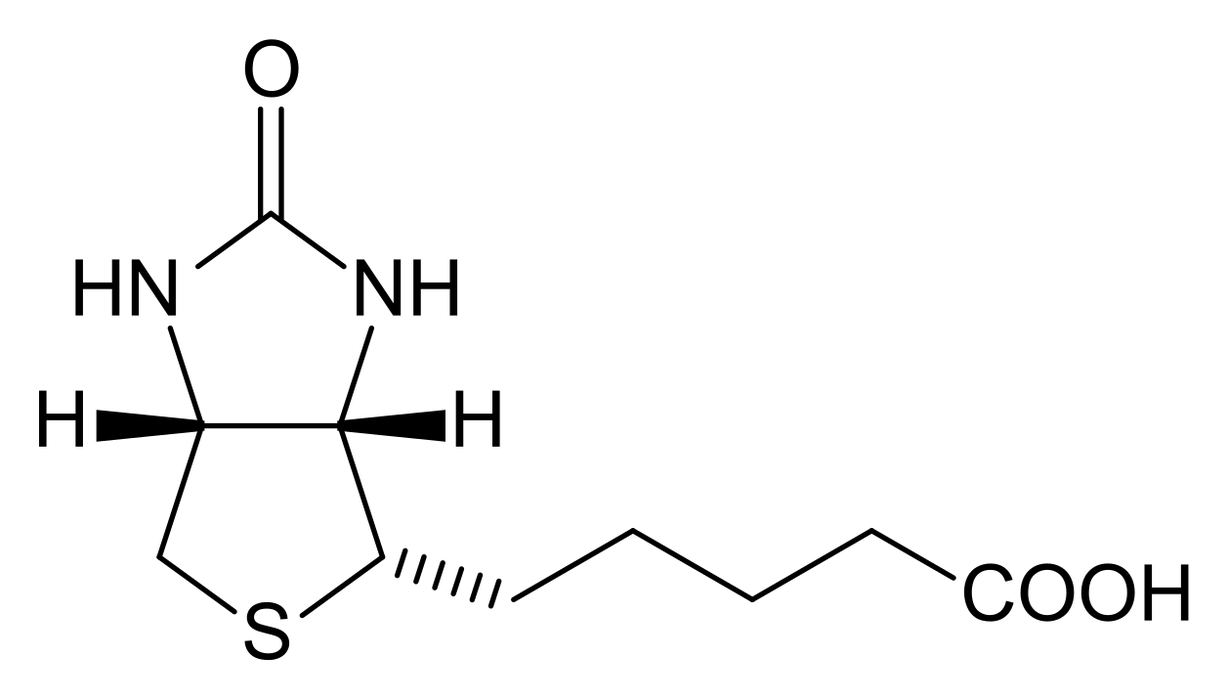
Structure of biotin (vitamin B7).
Credit: Mysid / Wikimedia Commons

License: Public domain
Rendered from SVG to PNG, whitespace trimmed and placed on white
What it is
Biotin (CAS 58-85-5) is vitamin B7, a water-soluble B vitamin. [1,2]
What it does and why it is used
It is needed for growth, helps the body break down and use food, and is required for making fatty acids. [1]
Regulatory status and health context
Canada
The sources used for this review do not summarize Canadian rules for biotin, so we do not describe them here.
United States
The sources used for this review do not summarize US rules for biotin, so we do not describe them here.
European Union
The EU law website was not fully available when this article was reviewed, so EU legal status was not checked and is not summarized here.
Environmental notes
The sources used for this review do not assess biotin's environmental effects, so we do not summarize them here.
Quick facts
- CAS: 58-85-5. [2]
- Where: egg yolk, nuts, legumes, milk, organ meats. [1]
- Main concern: none known from excess. [1]
- Deficiency signs: rashes, hair loss, brittle nails. [1]
Sources
All URLs were fetched on 2026-11-15. The EU law website was not fully available that day, so EU legislation could not be checked for this review. Source publication dates differ from this draft's review date.