
Plastics & packagingHousehold materials
Antimony trioxide: a flame-retardant helper in plastics and fabrics with limited everyday risk
CAS 1309-64-4.Also known as antimony oxide and antimony(III) oxide.
Editorial draft Last reviewed 14 November 2026 About 770 words
CC INDEX
How it works38/100 Mild
Worker studies link breathing antimony dust with lung, heart and stomach problems, and rats breathing high levels of antimony trioxide developed lung cancer. Everyday exposure from food, water and plastic bottles is very low and not known to cause health effects. US drinking water limits apply, so the score sits in the mild band.
An editorial summary of this article’s cited evidence. It isn’t medical advice or a personal risk estimate.
Age index
What is the age index?Which age groups are more affected by this chemical’s possible health issues, based on this article’s sources.
- Pregnancy Unborn babies Not well studied
- Infants 0 to 1 Not well studied
- Young children 1 to 5 Not well studied
- Children 6 to 12 Not well studied
- Teens 13 to 19 Not well studied
- Adults 20 to 64 Lower concern
- Older adults 65 and over Not well studied
- Harms have been reported in workers breathing antimony dust; the sources do not compare risk by age for everyday exposure.

Illustration of plastic water bottles and a blanket. Antimony oxide is added to some plastics and textiles to help them resist fire.
Credit: Chemical Century; AI-generated illustration
License: CC0 1.0
Illustration, not a photograph of a specific product. Resized and cropped for the web.
Antimony trioxide is a compound added to some plastics and fabrics to help them resist catching fire, and it is also used in paints, ceramics and glass enamels. Most of us take in tiny amounts of antimony every day through food and water, and water from some plastic bottles can carry a little more, though at levels not known to harm health. The clearer concerns come from workplaces where people breathed antimony dust, which was linked to lung, heart and stomach problems. Rats breathing high levels developed lung cancer, so agencies treat it as a possible human carcinogen while the human evidence remains limited.
Everyday exposure: where you meet it and how much
Antimony is a silvery-white metal found naturally in the earth's crust. [1] Antimony oxide is added to textiles and plastics to prevent them from catching fire, and is also used in paints, ceramics and fireworks and as enamels for plastics, metal and glass. [1]
Because antimony occurs naturally, people are exposed to very low levels every day, mostly in food and drinking water. [1] Water from some plastic bottles may contain higher levels, but these levels are not known to cause health effects. [1] Higher levels can be found near waste sites and industries that process or release antimony, such as smelters, coal-fired plants and garbage incinerators. [1]
Known and suspected harms
Evidence labels are editorial summaries, not individual risk predictions: established means recognized under the stated conditions; probable means a likely contribution with uncertainty; possible means limited evidence; disputed means assessors disagree. These labels do not describe how common an effect is.
- Established — effects in workers breathing dust: studies in workers show that breathing antimony dust can cause heart and lung problems, stomach pain, diarrhea, vomiting and stomach ulcers. [1] Antimony trioxide does not dissolve easily, so it stays in the lungs longer, where it can damage them. [1]
- Possible — cancer: lung cancer was found in some studies of rats that breathed high levels of antimony trioxide. [1] The US Department of Health and Human Services considers it reasonably anticipated to be a human carcinogen, and the International Agency for Research on Cancer considers it possibly carcinogenic to humans. [1]
- Possible — effects seen in animals swallowing antimony: animals swallowing antimony showed liver damage, lower blood sugar and slower growth, mostly at doses higher than those found in the environment. [1] Antimony can also irritate the skin and eyes. [1]
Reducing avoidable exposure and harm
The levels of antimony found in the environment are lower than levels known to cause health problems. [1] If you live near a waste site contaminated with antimony, keep children from eating or playing in the dirt, and talk to a doctor if your family may have been exposed to a significant amount. [1] Medical tests can measure antimony in urine, feces and blood for several days after exposure, but they cannot tell how much exposure occurred or predict health effects. [1]
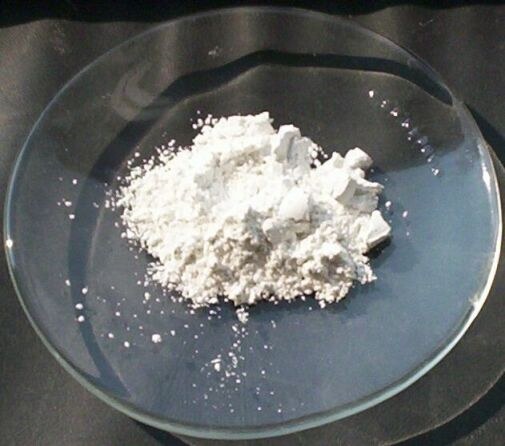
Antimony trioxide powder.
Credit: Walkerma / Wikimedia Commons

License: Public domain
Resized for the web; no content edits
What it is
Antimony trioxide (CAS 1309-64-4) is a compound of antimony and oxygen that does not dissolve easily. [1,3] Most health data are for trivalent antimony compounds like this one, which appear more harmful than pentavalent compounds. [1]
What it does and why it is used
It acts as a flame-retardant additive in textiles and plastics and is used in paints, ceramics and enamels. [1]
Regulatory status and health context
Canada
The sources used for this review do not cover antimony trioxide's status in Canada, so we do not summarize it here.
United States
EPA's drinking water standard for antimony is 0.006 milligrams per litre; EPA lists discharge from petroleum refineries, fire retardants, ceramics, electronics and solder as sources, and increased blood cholesterol and decreased blood sugar as effects of long-term exposure above the limit. [2]
European Union
The sources used for this review do not cover antimony trioxide's status in the European Union, so we do not summarize it here.
Environmental notes
Antimony occurs naturally, and higher levels can be found near smelters, coal-fired plants, garbage incinerators and contaminated waste sites. [1]
Quick facts
- CAS: 1309-64-4. [3]
- Where: flame-retardant plastics and textiles, paints, ceramics; trace antimony in food, water and some bottled water. [1]
- Main danger: lung and other harm from breathing dust at work; possible cancer. [1]
- Most at risk: workers who breathe antimony dust. [1]
Sources
All URLs were fetched on 2026-11-14. Source publication dates differ from this draft's review date.