
Alpha hydroxy acids: the exfoliating acids in skin creams, and the sunburn alert
CAS 79-14-1.Also known as AHA, glycolic acid, and lactic acid.
Editorial draft Last reviewed 15 November 2026 About 683 words
CC INDEX
How it works36/100 Mild
AHAs can irritate skin and make it more sensitive to sunburn, with the most serious reactions linked to strong peels. They are often used in skin-care products. FDA recommends a sunburn alert on labels, so the score sits in the mild band.
An editorial summary of this article’s cited evidence. It isn’t medical advice or a personal risk estimate.
Age index
What is the age index?Which age groups are more affected by this chemical’s possible health issues, based on this article’s sources.
- Pregnancy Unborn babies Lower concern
- Infants 0 to 1 Lower concern
- Young children 1 to 5 Lower concern
- Children 6 to 12 Lower concern
- Teens 13 to 19 Lower concern
- Adults 20 to 64 Lower concern
- Older adults 65 and over Lower concern
- The sources used for this review do not give age-specific advice on AHAs.

Illustration of skin care and sun protection. AHA products make skin more sensitive to the sun.
Credit: Chemical Century; AI-generated illustration
License: CC0 1.0
Illustration, not a photograph of a specific product. Resized and cropped for the web.
Alpha hydroxy acids, or AHAs, such as glycolic and lactic acid, are ingredients in skin creams and peels that make the outer layer of skin shed for a smoother look. They can cause burning, redness or irritation, and strong peeling products seem to cause the most serious reactions. AHAs also make skin more sensitive to the sun, although this effect fades within about a week of stopping. Daily sun protection is the main way to use them more safely.
Everyday exposure: where you meet it and how much
AHAs are often used in cosmetic and drug products applied to the skin, marketed for smoothing fine lines, improving texture and tone and unblocking pores; they are also sometimes used to adjust a product's pH. [1] Products marketed as skin peelers may contain relatively high concentrations. [1] The most common AHAs in cosmetics are glycolic acid and lactic acid; others include citric acid. [1] Products used only by professionals, such as in salons, do not have to carry an ingredient list. [1]
Known and suspected harms
Evidence labels are editorial summaries, not individual risk predictions: established means recognized under the stated conditions; probable means a likely contribution with uncertainty; possible means limited evidence; disputed means assessors disagree. These labels do not describe how common an effect is.
- Established — skin reactions: FDA received 114 reports of skin reactions to AHA products between 1992 and February 2004, including burning, rash, swelling, colour changes, blisters, peeling, itching and chemical burns; the most serious reactions appear to occur with products that cause the most exfoliation, such as skin peelers. [1]
- Established — sun sensitivity: after four weeks of AHA use, volunteers' sensitivity to UV skin reddening rose by 18 percent and UV-induced cell damage doubled on average; one week after stopping, there was no significant difference. [1]
- Established — no added cancer in a mouse study: a study with the National Toxicology Program found glycolic acid did not affect light-related cancer development in mice. [1]
Reducing avoidable exposure and harm
Use sunscreen, wear protective clothing and limit sun exposure while using AHA products and for a week afterwards, as FDA's recommended sunburn alert says. [1] Follow label directions and warnings. [1] An industry safety panel concluded that glycolic and lactic acid products are safe when the AHA concentration is 10 percent or less, the pH is 3.5 or greater, and the product protects against sun sensitivity or tells users to use daily sun protection. [1]
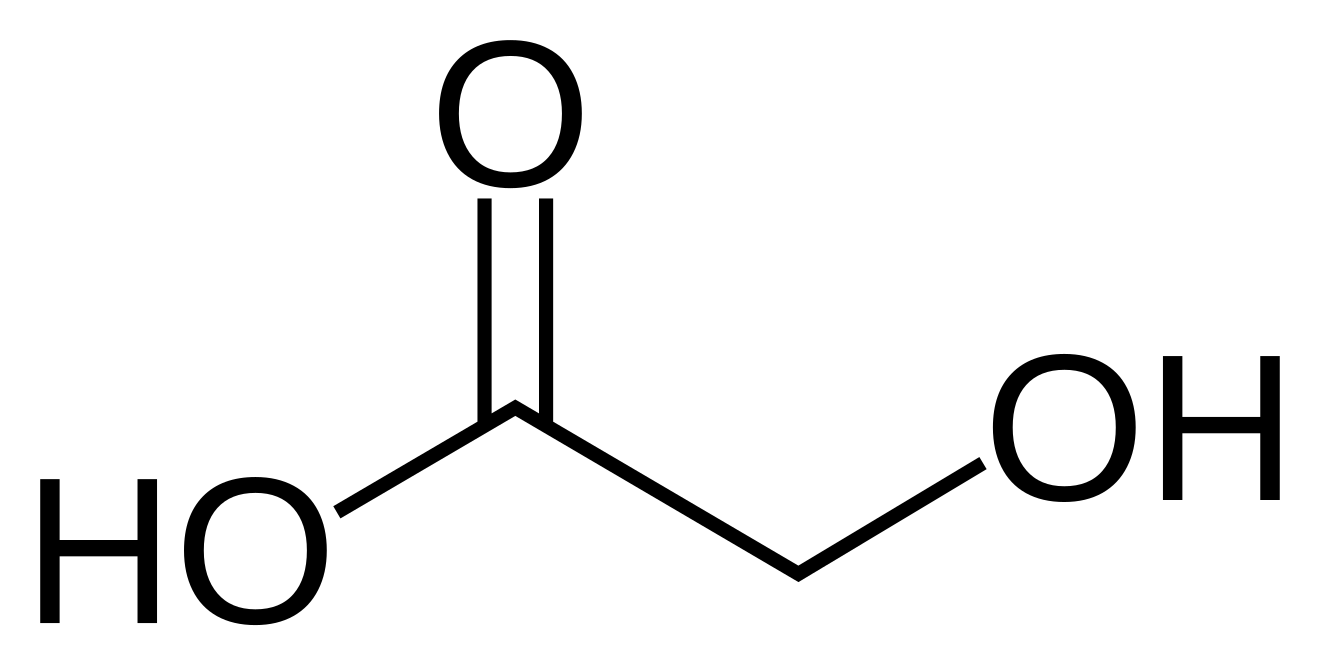
Structural formula of glycolic acid, the most common alpha hydroxy acid in cosmetics.
Credit: STALLKERL / Wikimedia Commons

License: Public domain
Rendered from SVG to PNG, whitespace trimmed and placed on white
What it is
Alpha hydroxy acids are a group of acids; glycolic acid (CAS 79-14-1) and lactic acid are the most common in cosmetics. [1,2]
What it does and why it is used
AHA products cause exfoliation, the shedding of surface skin; how much depends on the type and concentration of the AHA, its pH and other ingredients. [1]
Regulatory status and health context
Canada
The sources used for this review do not summarize Canadian rules for alpha hydroxy acids in cosmetics, so we do not describe them here.
United States
FDA's 2005 guidance recommends that cosmetics containing AHAs carry a sunburn alert, and products intended to treat acne or lighten skin are regulated as drugs. [1]
European Union
The EU law website was not fully available when this article was reviewed, so EU legal status was not checked and is not summarized here.
Environmental notes
The sources used for this review do not assess alpha hydroxy acids's environmental effects, so we do not summarize them here.
Quick facts
- CAS: 79-14-1 (glycolic acid). [2]
- Where: exfoliating creams, serums and peels. [1]
- Main concern: sunburn sensitivity and skin irritation. [1]
- Most at risk: users of strong skin peelers. [1]
Sources
All URLs were fetched on 2026-11-15. The EU law website was not fully available that day, so EU legislation could not be checked for this review. Source publication dates differ from this draft's review date.